Smart mirrors have developed far beyond conventional mirrors that display the weather, calendar or notifications.
Modern smart mirrors and interactive mirrors combine a live reflection with augmented reality, artificial intelligence, product information and interactive content. They can analyze skin, provide recommendations, create digital transformations and let customers virtually try on clothing, makeup or accessories.
Retail is one of their most practical applications. An interactive mirror can transform a storefront, fitting room, beauty counter or existing display into a customer touchpoint that supports product discovery, engagement and sales.
After delivering more than 100 AR and AI mirror activations, FFFACE.ME has found that the most effective projects are not necessarily the most complex. They make the interaction easy to understand, provide an immediate benefit and support a clear business objective.
What Is a Smart Mirror?
A smart mirror is a mirror or camera-enabled display that combines a person’s reflection with digital information or interactive content. It typically uses a screen, camera, sensors and specialized software.
Some smart mirrors use reflective glass with a display installed behind it, while others use a camera and screen to create a live mirrored image. The same technology can also transform a storefront screen, digital-signage display or outdoor LED facade into an interactive mirror.
Smart mirrors can function as home information displays, fitness platforms, beauty assistants, virtual fitting rooms, product recommendation tools, interactive retail displays or branded event experiences. The appropriate format depends on where the mirror will be installed and what users should be able to do.
What Is an Interactive Mirror?
An interactive mirror is a smart mirror that responds to the person in front of it. The interaction can be activated through touch, body or hand movements, facial expressions, voice commands, proximity sensors, product selection, QR codes or RFID tags.
The terms “smart mirror” and “interactive mirror” are often used interchangeably. However, a smart mirror refers to the complete digital system, while an interactive mirror emphasizes the way the user engages with it.
An interactive mirror does not necessarily require physical mirror glass. A commercial display can provide the same experience by showing a live reflection and responding to the user’s actions. This gives brands more deployment options, as existing screens in stores, storefronts and event spaces can often be transformed into interactive mirrors by adding a camera, processor and compatible software.
How Do Smart and Interactive Mirrors Work?
A smart mirror captures an image or action, processes it through software and displays a response in real time.
A typical interactive mirror system includes:
- A screen, LED display or reflective surface
- A camera for face, body or gesture tracking
- Motion, proximity or touch sensors
- A computer or media player
- AR or AI software
- A content-management platform
- An analytics system
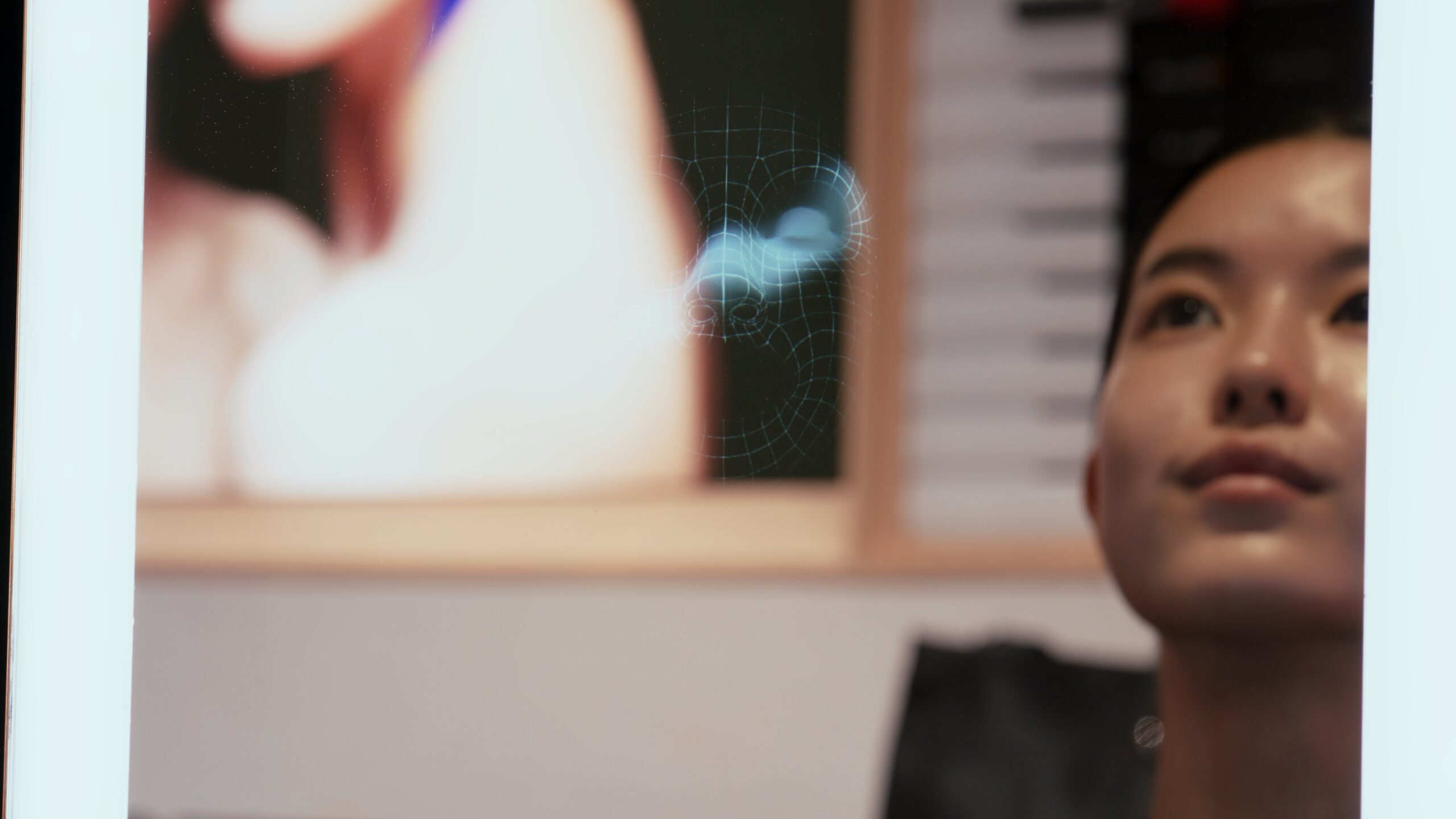
When a customer approaches the display, a sensor can start the experience. The camera identifies the person’s position, while the software aligns content with their face or body.
Depending on the application, an interactive mirror can apply a virtual product, generate a personalized look, recommend relevant items, display information, launch a branded game, create a photo or video, or direct the customer to a product page.
Although the underlying technology may be complex, the user journey should remain simple. In FFFACE.ME projects, we aim to make the first action understandable within a few seconds. If every customer needs instructions from a staff member, the interaction should be simplified.
An Interactive Mirror Is More Than Another Screen
Traditional digital signage asks customers to watch. An interactive mirror invites them to take an action.
Once customers see themselves on the screen, the content becomes personally relevant. They can explore how a product looks on them rather than only viewing it on a model.
A typical interaction might include:
- The customer approaches the screen.
- The mirror activates automatically.
- The customer selects a product or experience.
- AR or AI generates the result.
- The customer compares options.
- They scan a QR code, create content or continue to the product.
This also makes an interactive mirror more measurable than passive signage. A smart mirror can track activations, session duration, products explored, photos created and QR-code scans.
At FFFACE.ME, we view this as the main difference: passive screens deliver content, while interactive mirrors help customers complete an action.
Smart Mirrors, AR Mirrors and AI Mirrors: What Is the Difference?
Several related terms are used to describe interactive mirror technology.
A smart mirror is the complete system, including the display, camera, software and content.
An interactive mirror responds to the user’s presence or actions.
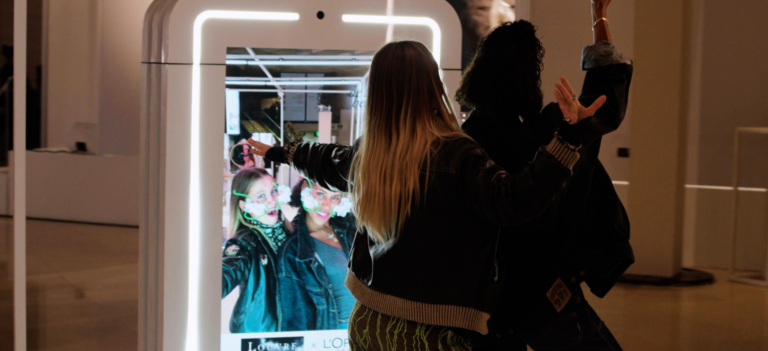
An AR mirror overlays digital products, effects or animations onto a live reflection. It can apply makeup, place sunglasses on the customer’s face or transform them into a branded character.
An AI mirror uses artificial intelligence to analyze, recommend or generate content. It might suggest products, analyze visible skin characteristics, generate an outfit or create a personalized transformation.
A virtual try-on mirror focuses on showing how clothing, makeup, eyewear or accessories could look on the customer.
One installation can combine several technologies. For example, AR can position a product on the user, while AI recommends the most relevant options.
Customers do not need to understand the technical difference. They need to understand what the experience allows them to do and what they will receive from it.
Where Are Smart Mirrors Used?
Smart mirrors are used in homes, fitness, beauty, healthcare, hospitality, entertainment and retail.
Home smart mirrors can display schedules, weather updates and connected-device controls. Fitness mirrors combine video instruction with a live reflection, while beauty mirrors can provide tutorials, skin analysis and makeup previews.
Retail smart mirrors have additional requirements. They need to attract attention in a busy environment, explain the interaction quickly, work for different users, perform reliably for long periods, connect with relevant products or services, collect performance data and fit naturally into the physical retail space. This makes a retail smart mirror both a technology product and a customer-experience tool.
Smart Mirrors for Fashion Retail
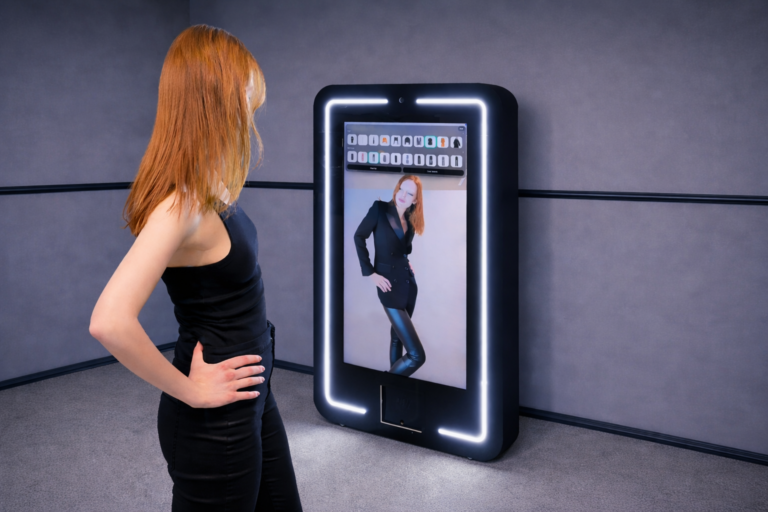
Fashion brands can use smart mirrors as digital fitting rooms, styling tools and collection-discovery platforms.
AI clothing try-on allows customers to see themselves in different outfits without physically changing clothes. One interactive mirror can present dozens or hundreds of products, including items not available in every size or color at the location.
A fashion smart mirror can help shoppers:
- Explore a collection
- Compare complete outfits
- Discover coordinated products
- Receive styling suggestions
- Save or share favorite looks
- Open relevant product pages
- Choose products for physical fitting
Virtual try-on does not have to replace a conventional fitting room. It can help shoppers discover products and create a shortlist before trying selected items.
For H&M × Stella McCartney, FFFACE.ME created an AI clothing try-on experience in Lima featuring more than 40 looks. The activation generated hundreds of try-ons and shares.
The project showed that customers wanted to move quickly between complete looks, compare results and create content. These actions were combined into one simple customer journey.
Smart Mirrors for Beauty Retail
Beauty is well suited to interactive mirrors because customers often want to compare multiple shades, finishes and combinations.
An AR mirror can virtually apply:
- Lipstick
- Eyeshadow
- Blush
- Foundation
- Complete makeup looks
Customers can move between options without repeatedly applying and removing physical testers.
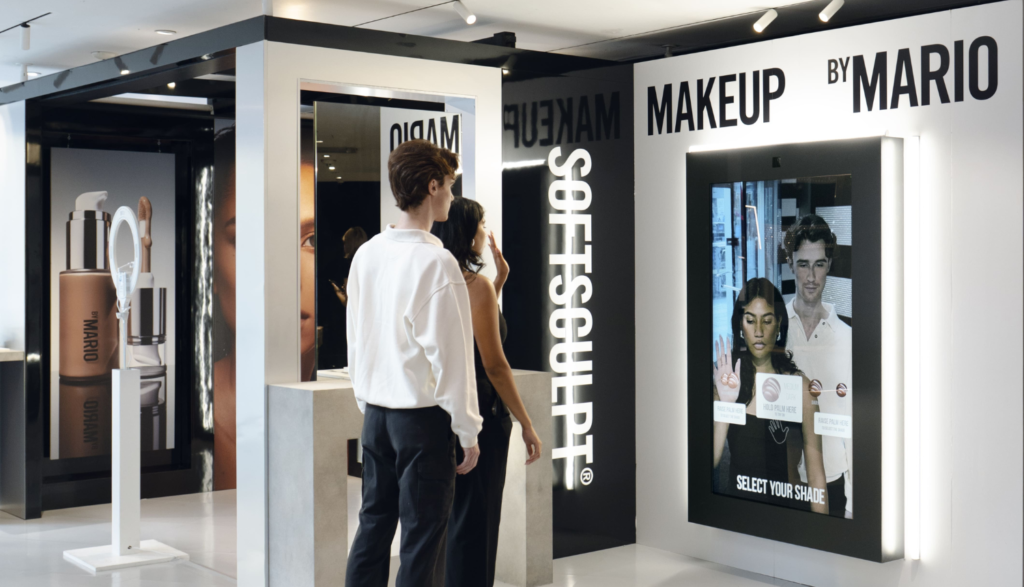
AI can add analysis and recommendations. An AI mirror can identify visible skin characteristics, suggest products, create complete looks or guide the customer through a routine.
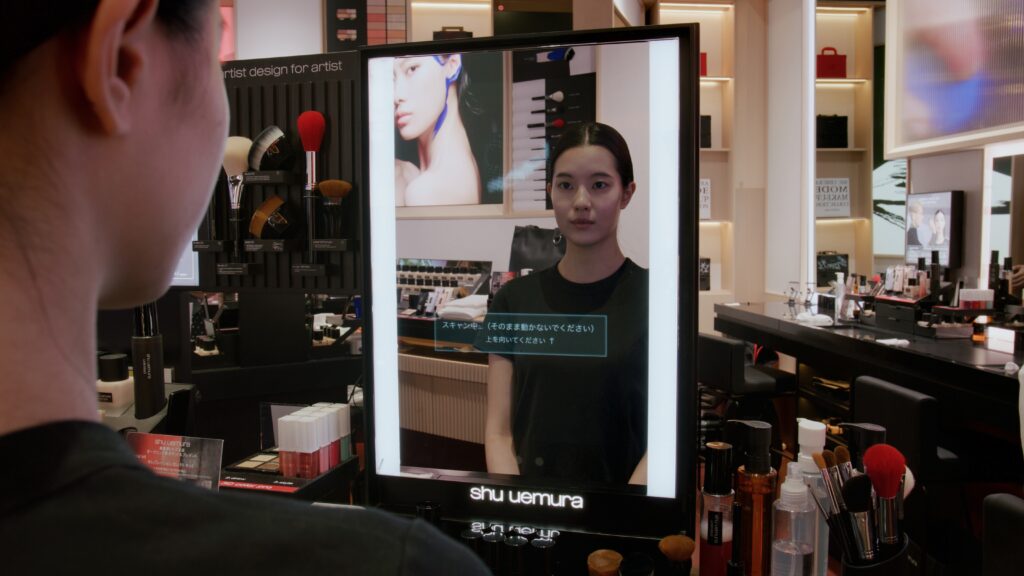
For Shu Uemura, FFFACE.ME developed a permanent Reflective AI Mirror in Tokyo. The installation combines real mirror glass, three-dimensional facial analysis and digital recommendations with support from a makeup artist.
This model demonstrates how an interactive mirror can support store staff. Instead of replacing the makeup artist, it gives them an additional tool for explaining recommendations and presenting products.
Smart Mirrors for Eyewear and Accessories
Interactive mirrors can help customers virtually try on sunglasses, optical frames, jewelry, hats and other accessories.
AR software tracks the user’s face and aligns the selected product with it in real time. Customers can switch between options, create a photo, print branded content or scan a QR code to continue online.
At Istanbul Airport, FFFACE.ME created an AR mirror for Fendi that allowed travelers to virtually try on sunglasses and receive an instant branded print.
The activation generated more than 400 prints, and the featured product line sold out. Sales increased by 43% year over year compared with the previous non-AR activation. The format was later expanded to Dubai.
The printed photo gave customers a clear reason to complete the experience and created a physical branded takeaway.
Interactive Experience Can Start Outside the Store
Interactive mirrors do not need to be placed inside the store.
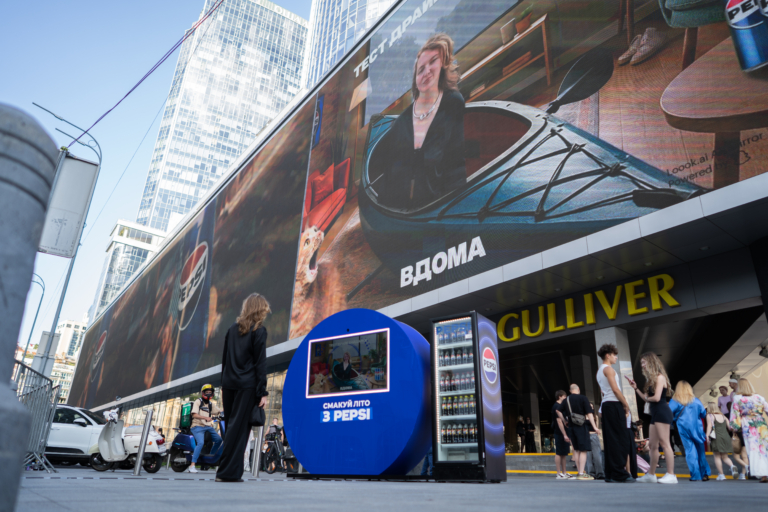
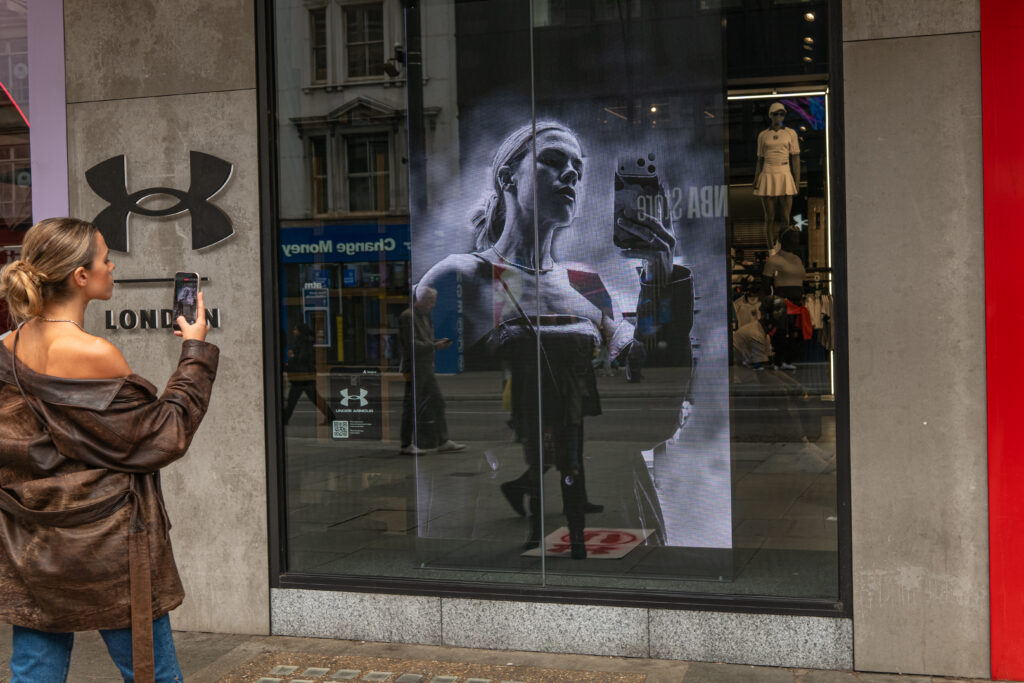
An interactive storefront uses a camera, sensors and a display to respond to people passing outside. A static window can become an AR mirror, virtual try-on experience, game or branded photo opportunity.
For Kiehl’s, FFFACE.ME transformed the Nolita storefront in New York into an interactive AR experience. It generated 3,118 interactions, averaging approximately 17 per hour, and contributed to increased foot traffic.
At Bershka’s Madrid flagship, two outdoor AR mirrors introduced visitors to the GEN collection. The activation generated more than 10,000 unique interactions during its first weekend.
Under Armour introduced a permanent interactive storefront at its Oxford Street store in London. It generated more than 5,000 activations during its first week and can be updated for new collections.
These projects show why placement must be considered early. A smart mirror needs:
- Sufficient visibility
- Appropriate lighting
- Enough space for interaction
- A clear camera view
- A safe distance from traffic
- A direct relationship with the store entrance or product area
A strong concept can underperform if the screen is placed where customers cannot see or comfortably use it.
Smart Mirrors Can Work at Architectural Scale
An interactive mirror does not need to look like a traditional mirror.
For Maybelline New York, FFFACE.ME transformed a 4,000-square-metre building facade in Kyiv into a large-scale AR mirror. The activation generated more than 10,000 interactions in eight hours and over three million online impressions.
The project demonstrated that large LED screens and building facades can become interactive media rather than simply displaying advertisements.
To create a large-scale AR mirror, brands need to consider:
- Camera coverage
- User position
- Distance from the screen
- Screen resolution
- Environmental lighting
- Interaction instructions
- Crowd management
- Online content potential
Large-format interactive mirrors work particularly well when the experience is visually clear to both the participant and the surrounding audience.
What Makes an Interactive Mirror Effective?
Based on FFFACE.ME’s experience with retail and brand activations, several factors consistently affect performance.
- Make the interaction immediately clear. Communicate the first action within a few seconds with a simple invitation such as “Stand here,” “Choose a look,” “Try it on,” “Move to play” or “Create your photo.”
- Give the customer something useful. Provide a clear result, such as a product recommendation, virtual try-on, personalized look, photo, video, print, prize or product QR code. The output should support the campaign objective.
- Keep the experience short. Focus on one central action, followed by an immediate result and a clear CTA. Too many screens or decisions can cause customers to leave.
- Test the physical environment. Check the lighting, viewing distance, camera position, background activity and direction of foot traffic. Testing should take place in conditions similar to the final location.
- Prepare store staff. Employees should understand how the interactive mirror works, which products it features and how to assist customers when needed.
- Make content easy to update. Use remote content management to introduce new products, collections and seasonal campaigns without rebuilding the installation.
- Plan analytics before launch. Define the required KPIs and customer actions before designing the experience so they can be included in the analytics setup.

What Are the Benefits of Smart Mirrors for Customers?
A well-designed interactive mirror makes shopping faster, easier and more personalized. It helps customers discover products, compare options, explore more styles and colors, and receive relevant recommendations. It can also reduce the need to handle physical testers, connect in-store discovery with online shopping, and let customers create shareable photos or videos. Together, these benefits make the store visit more useful and engaging.
To deliver these benefits, the technology must be responsive and intuitive. Long loading times, unclear instructions or inaccurate tracking can frustrate customers and reduce trust in the experience.
What Are the Benefits for Retailers?
Smart mirrors can help retailers capture attention, increase product discovery and encourage customer participation. They can present an extended product range, drive visitors to product pages, collect leads with consent and generate branded user-generated content. Brands can also measure campaign engagement, update content remotely and support assisted sales.
The expected benefit should reflect the mirror’s position in the customer journey. An interactive storefront may focus on attracting foot traffic, while an in-store try-on mirror can support product consideration and purchase decisions. At an event, the priority may be reach, content creation or lead generation.
How Should Smart Mirror Performance Be Measured?
The right metrics depend on the project’s objective.
Common smart mirror metrics include:
- Total activations
- Unique interactions
- Activations per hour
- Average interaction time
- Products or looks explored
- Virtual try-on sessions
- Photos and videos created
- Prints generated
- QR-code scans
- Leads collected
- Product-page visits
- Store visits
- Assisted purchases
A useful measurement plan should answer three questions:
- Did people notice and activate the experience?
- Did they complete the intended interaction?
- Did they take the next desired action?
These stages provide more useful information than a single total interaction number.
What About Privacy?
Brands should establish clear privacy requirements before launching an interactive mirror. They need to understand what the camera processes, whether photos or videos are stored, how long information is retained, whether analytics are anonymous, when customer consent is required, how lead information is handled and which regional privacy rules apply.
Many useful metrics, including activations, interaction duration and feature usage, can be collected without identifying individual customers. If users can save content, enter a prize draw or submit contact information, the interactive mirror should clearly explain what data is collected and how it will be used.
The Future of Interactive Mirrors
Smart mirrors are becoming more responsive and personalized as AI generation, body tracking and virtual try-on improve.
They are also becoming more closely connected to product catalogs, e-commerce platforms, loyalty systems and store services.
Future interactive mirrors may help customers:
- Find relevant products
- Generate personalized outfits
- Compare complete looks
- Receive AI-assisted recommendations
- Check product availability
- Save selections to an account
- Continue shopping on a mobile device
- Request help from a store associate
However, more features do not automatically create a better experience. The most effective interactive mirrors will continue to focus on a clear customer need and a simple path from activation to result.
Create an Interactive Mirror With FFFACE.ME
FFFACE.ME is an award-winning innovation agency creating smart mirrors, interactive mirrors and AR and AI experiences for global fashion, beauty and consumer brands.
We manage the complete process—from strategy and creative concept to content, software, hardware integration, installation and analytics. Our interactive mirrors can be deployed in stores, storefronts, fitting rooms, pop-ups, airports, malls, events and large-scale outdoor locations.
Contact FFFACE.ME to discuss an interactive mirror experience for your brand.
Frequently Asked Questions
Can FFFACE.ME turn an existing screen into an interactive mirror?
Yes. Many existing commercial screens, digital-signage displays and LED installations can be transformed into interactive mirrors by adding a camera, processing hardware and compatible software. FFFACE.ME first assesses the screen, location, lighting and required interaction to confirm compatibility.
How long does it take to launch an interactive mirror?
A focused interactive mirror experience can often be launched within one to four weeks. The final timeline depends on the required AI or AR functionality, number of products, custom content, hardware setup and external integrations.
Can the content be updated after launch?
Yes. Content can be managed and updated remotely, allowing brands to introduce new products, collections, campaigns or seasonal experiences without replacing the complete installation.
What analytics can an interactive mirror collect?
The system can measure activations, unique interactions, interaction time, products explored, virtual try-ons, photos or videos created, prints, QR-code scans and other campaign-specific actions. Analytics can be configured according to the project’s KPIs.
Can an interactive mirror connect with our product catalog or website?
Yes. Interactive mirrors can be connected with product catalogs, e-commerce pages, QR-code journeys and other digital systems. More complex integrations with inventory, CRM or retail platforms can be evaluated during project planning.
Can FFFACE.ME provide both the software and hardware?
Yes. FFFACE.ME can manage the complete project, including strategy, creative concept, content, software, hardware selection, integration, installation, testing and analytics. Existing brand hardware can also be used when technically compatible.
How much does an interactive mirror cost?
The cost depends on the screen and hardware, AR or AI functionality, number of products, custom content, location, campaign duration and required integrations. FFFACE.ME provides a project-based estimate after reviewing the brief and technical requirements.
Can one interactive mirror support different campaigns?
Yes. A permanent installation can be updated with new products, visuals and interactive scenarios, allowing the same hardware to support multiple collections or campaigns over time.
How do we start an interactive mirror project?
Start by defining the location, campaign objective, customer action and available hardware. FFFACE.ME can then recommend the appropriate format, technology, content and measurement plan for the project.