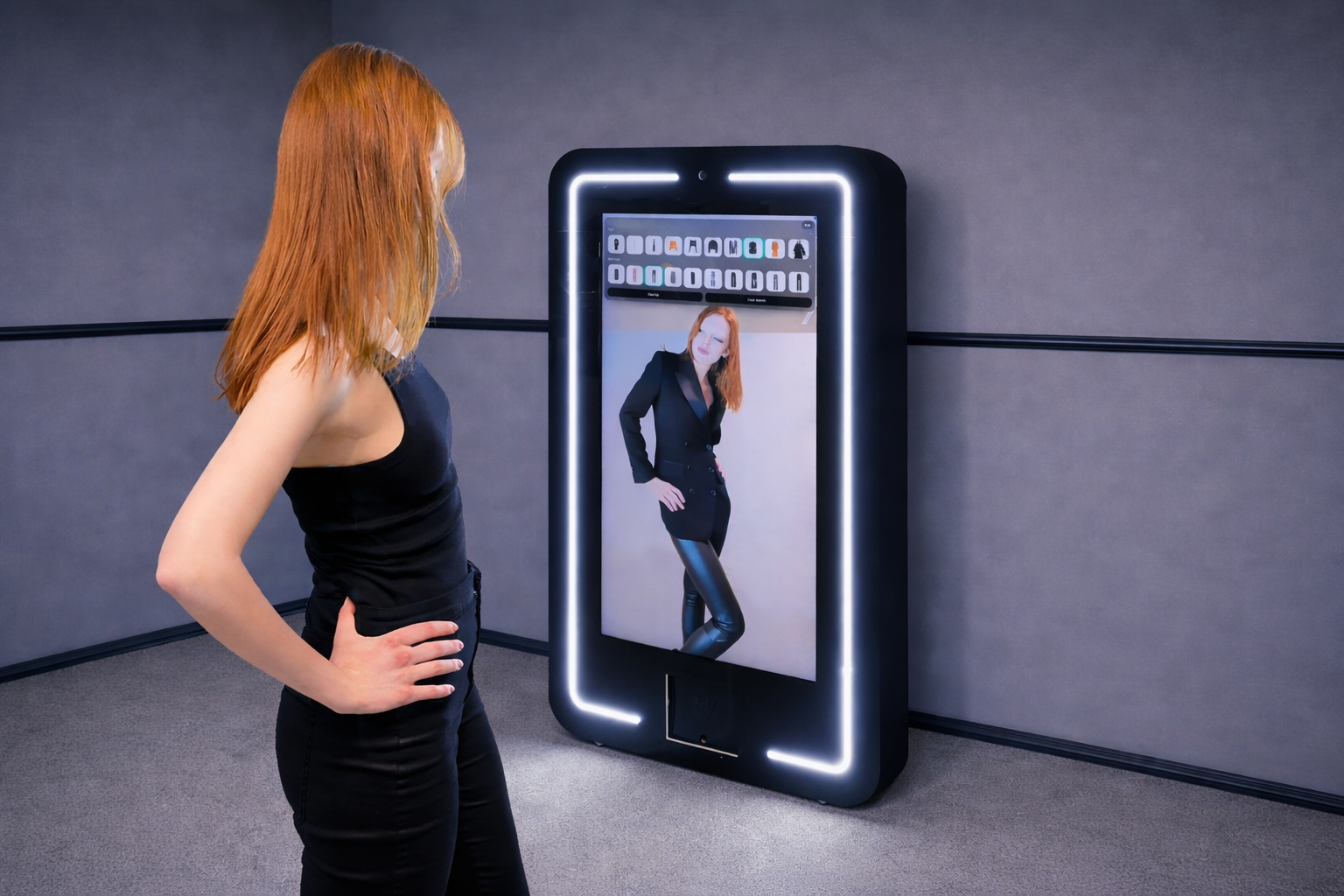
Fashion retail has entered a new phase. Strong visuals still matter, but the real differentiator now is participation. Customers expect experiences that invite them to explore, make choices, and see results instantly.
So here is the key question: how do you turn a collection into something people can interact with, not just scroll past?
That is where virtual try-on earns its place. What began as a playful digital layer has become a practical retail tool that helps brands showcase more items, bring physical spaces to life, and connect product storytelling with real customer engagement.
The category is evolving again. Early AR proved that interactivity works, but expectations have risen. Brands now want try-on experiences that feel more realistic and premium. That is why the shift from traditional AR overlays to AI-enhanced try-on is accelerating.
At FFFACE.ME, we see this as both a creative and commercial opportunity. When virtual try-on is executed well, it is not a novelty. It is a scalable format for retail, pop-ups, launches, and brand activations that improves product discovery and supports measurable business outcomes.
What Is AR Clothing Try-On?
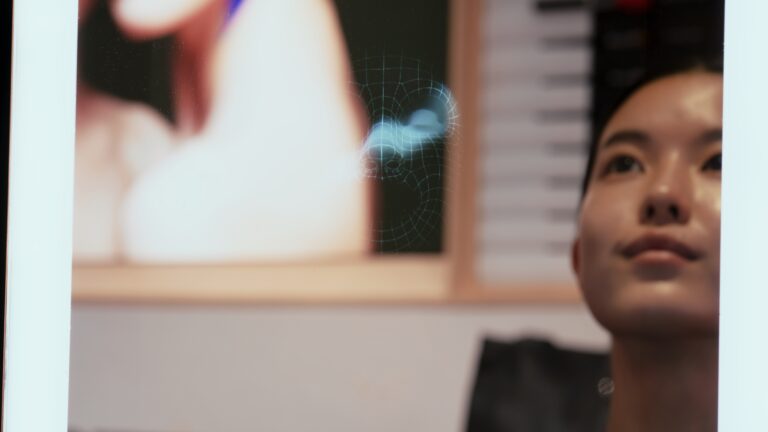
AR clothing try-on is a technology that lets people see digital garments on themselves through a live camera, smart mirror, or interactive screen.
Instead of guessing how a piece might look, customers can select an item and see it appear on their body in real time, responding as they move.
For brands, it turns product display into an experience. It can be deployed across multiple touchpoints, including:
- retail stores
- pop-ups
- brand activations
- storefront displays
- ecommerce journeys
- omnichannel campaigns
The core value is straightforward: when people can interact with a product, they spend more time with it, explore more options, and remember the brand more clearly.
How Does AR Clothing Try-on Work?
The virtual try-on system detects the user’s body and places a digital clothing item over the live image, so the person can see how it looks while moving.
A typical try-on flow looks like this:
- Live camera capture: The user stands in front of a phone, tablet, mirror, laptop, or interactive screen with a camera.
- Body tracking: The system identifies body position, proportions, and movement.
- Garment placement: A selected item is mapped onto the live image.
- Real-time interaction: The user can turn, move, and switch between looks.
- Product exploration: Multiple items, colors, or styles can be presented in one seamless experience.
This is what makes digital fitting tools especially useful in fashion: they turn browsing into interaction.
Why Fashion Brands Use Virtual Clothing Try-On
Fashion brands use virtual try-on to increase engagement, showcase more items, and create stronger retail experiences. The reason is simple: this technology makes product discovery more interactive, memorable, and easier to scale across different retail and campaign formats.
Instead of passively viewing campaign visuals or product pages, customers can engage directly with the look. This gives people a stronger reason to stop, explore, and spend more time with the brand. It also helps brands present a wider assortment, since one installation can showcase far more styles than a traditional display or fitting area.
Virtual try-on also improves storytelling. Collections are easier to launch and present in a more immersive way when people can interact with them rather than only view them. And when the experience looks visually strong, it becomes more shareable, which adds value for marketing and brand visibility.
Another advantage is measurement. With analytics in place, brands can track interaction levels, user behavior, and product interest. For business teams, this means one experience can support branding, merchandising, and performance measurement at the same time.
Where It Creates Business Value
Virtual try-on creates the most business value when brands want to combine product discovery, engagement, and experience in one format. It is especially effective in retail environments, pop-ups, launches, events, ecommerce, and omnichannel journeys, where the technology can do more than simply display a product.
Key use cases include:
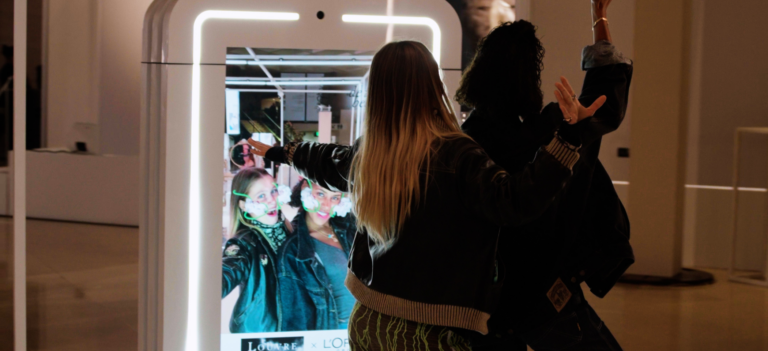
- In-store smart mirrors for interactive styling and faster product exploration, for example when a fashion retailer installs an AI mirror so shoppers can try multiple outfits without going to the fitting room each time.
- Pop-ups and temporary retail for showcasing a wider collection in limited space, for example when a brand pop-up presents dozens of digital looks through one try-on installation instead of bringing the full clothing assortment on-site.
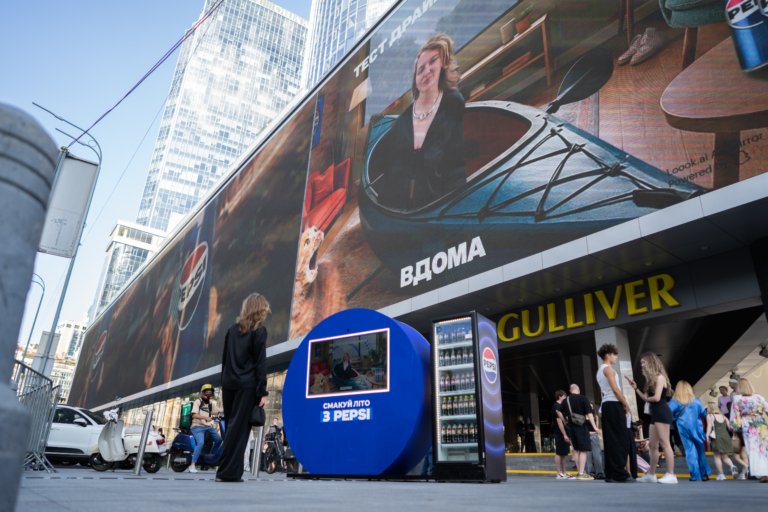
- Storefront activations for turning foot traffic into direct engagement, for example when a street-facing screen invites passersby to try on selected looks from the new collection directly from the shop window.
- Fashion launches for presenting collections through participation, not just display, for example when visitors can try on hero pieces digitally as part of a capsule drop experience.
- Events and brand activations for combining entertainment, product interaction, and shareability, for example when guests use a virtual try-on mirror, take photos, and share their looks on social media.
- Ecommerce and mobile apps for making online product discovery more personal and visual, for example when a shopper uploads a photo in a brand’s mobile app to see how selected clothing items could look on them before purchase.
- Omnichannel journeys for connecting awareness, in-store discovery, and post-visit engagement, for example when a customer discovers the collection through a campaign, tries it on in-store via smart mirror, and later revisits the selected looks online.
That is why this format has become relevant not only for innovation teams, but also for marketers, retail leads, ecommerce teams, and experiential strategists.
The Limits of Traditional AR Clothing Try-On
Traditional AR is interactive, but it does not always look realistic enough for fashion.
Clothing is one of the hardest categories to simulate convincingly. Unlike smaller accessories, garments depend on silhouette, movement, body proportions, and visual texture. When those elements feel off, the result can read more like an effect than a product experience.
Common limitations include:
The overlay effect
One of the most common issues is that the garment can look placed on top of the person instead of fitting naturally to the body. It may appear flat, slightly detached, or misaligned, which makes the try-on feel obviously digital. In fashion, where shape and styling matter, this reduces the experience’s value as a product discovery tool.
Simplified movement
Clothing needs to respond naturally to posture, turns, and motion. In more basic AR systems, movement can feel stiff, delayed, or overly simplified. This is especially noticeable with loose silhouettes, dresses, or layered looks, where motion heavily influences how the garment is perceived.
Lower premium perception
In fashion, visual quality strongly shapes product perception. If a try-on looks rough, unstable, or obviously artificial, it can make the garment feel less refined. For premium and design-led brands, that weakens the overall brand experience rather than supporting it.
Scaling challenges
Traditional AR can also be harder to scale across large assortments. New items may require separate preparation or manual adjustments, which slows launches and makes updates more difficult. That creates friction for brands that need flexibility across changing collections and campaigns.
This is where the category begins to shift.
The Evolution Into AI-Enhanced Try-On
AI-enhanced try-on is the next stage because it improves realism while keeping the experience live and interactive.
As expectations rose, the market moved beyond simple overlays. Early virtual try-on experiences were valuable because they made fashion more interactive and gave people a new way to see clothing on themselves through a camera. But as brands began using these tools more seriously, interactivity alone was no longer enough.
Fashion brands wanted clothing to look more natural on the body, respond better to movement, and feel closer to the quality of the product itself. The question shifted from whether try-on was possible to whether it looked convincing enough to support real product discovery.
The progression is fairly clear:
- first came basic camera-based overlays
- then brands wanted better fit perception and smoother movement
- then AI started improving how clothing appears on the body
- now the strongest solutions combine interactivity with more believable rendering
This matters because AI is not replacing AR. It is refining it.
AR introduced interactivity into fashion retail. AI builds on that by making the result feel more natural, more polished, and more aligned with premium brand presentation. That is what makes AI-enhanced try-on an important next step for brands that want virtual try-on to feel not just engaging, but genuinely useful.
How FFFACE.ME and loook.ai Are Advancing the Category
FFFACE.ME, together with loook.ai and Decart, developed a real-time AI clothing try-on experience that combines live-camera interaction with more realistic, high-fidelity clothing visualization. The goal was to move beyond standard overlay-based systems and create a try-on format that feels smoother, cleaner, and more natural in real time.
Kfir Aberman, Founding Member at Decart, highlighted the technical shift behind it: “Decart’s real-time generative models allow these experiences to be created directly from simple images, eliminating traditional 3D pipelines and enabling scalable, high-fidelity try-on across entire retail catalogs.”
What makes this case important is that it shows how virtual try-on is evolving from a visual effect into a more practical business tool. The experience keeps the immediacy that makes try-on engaging, while improving how clothing appears on the body and making the format easier to scale across collections.
Key advantages include:
- live-camera interaction
- more natural body adaptation
- cleaner fit and movement
- sharper rendering quality
- smooth switching between many items
- scalable try-on created from simple images instead of traditional 3D pipelines
- built-in analytics and operational support
This creates clear business value. A more realistic try-on improves product presentation, supports a more premium brand feel, and helps brands show a wider assortment in one experience. It also encourages longer engagement and makes the format easier to use across stores, activations, launches, and branded environments.
AR Try-On vs AI Try-On
AR is usually stronger for live interaction, while AI is stronger for realism. The biggest business opportunity comes from combining both.
From a business perspective, AR and AI create value in different ways. AR is especially effective when the goal is immediate, interactive product discovery. It works well in stores, pop-ups, and activations because it gives people a reason to stop, engage, and explore multiple items quickly. This makes it strong for attention, participation, and memorable brand experiences.
AI creates value differently. Its main strength is making the try-on look more natural and visually refined. That matters because in fashion, realism shapes product perception. When clothing looks cleaner, smoother, and more believable on the body, the experience feels more premium and becomes more useful for true product discovery.
In simple terms, AR drives engagement, while AI improves perceived quality. AR tends to create more energy through live interaction. AI tends to make the experience polished enough to support the product itself.
That is why the real opportunity is not choosing one over the other. It is combining AR’s immediacy with AI’s realism, so brands can deliver try-on experiences that are both engaging and commercially stronger.
How to Choose the Right Virtual Try-On Solution
There are many virtual try-on solutions on the market, and the right choice depends on the use case, the level of realism, and how the experience will work in practice. Some solutions fit ecommerce and mobile journeys better, while others are more suitable for in-store screens, smart mirrors, pop-ups, or branded activations.
The most useful way to evaluate a provider is through a few practical questions:
- How realistic does the clothing look? How smooth is the user experience?
- How easy is it to add or update products?
- Can the solution support real operations, not just a demo?
- Does it include analytics and support?
It also helps to understand whether you need only a software tool or a broader solution partner. If the project includes hardware, branded design, launch support, or a full retail experience, an agency approach may be more suitable.
For example, FFFACE.ME develops virtual try-on not only as a technology feature, but as part of a wider brand and retail experience. In practice, the best choice is the one that fits your business goals, environment, and internal resources most clearly.
The Future of Fashion Try-On
The next generation of try-on will be more realistic, more scalable, more intelligent, and more connected to business systems.
Realism will continue to improve, but the bigger shift is operational. More systems will use AI to create high-quality try-on experiences from simpler inputs, making it easier for brands to launch, update, and scale large catalogs without heavy production workflows. That means faster rollout, more flexibility, and less friction when collections change.
Try-on will also become more intelligent. Instead of functioning as a standalone feature, it will connect more closely to analytics, product feeds, shopper behavior, and personalization. In practice, that means brands will not only show clothing on a person, but also learn which items attract attention and how virtual interaction supports real retail outcomes.
Another important shift is integration. Try-on will increasingly connect physical and digital touchpoints, allowing shoppers to discover a product through a campaign, try it on in-store, and continue exploring it later online or in an app. Over time, this will make virtual try-on feel less like an extra feature and more like a natural part of connected commerce.
Conclusion
Virtual try-on changed the way fashion brands think about product discovery. It introduced a more interactive way to present collections, engage customers, and transform physical environments.
But the category is maturing.
As brands demand stronger realism, smoother movement, and better visual quality, traditional AR experiences are evolving into something more advanced. Real-time AI try-on represents that next phase: still interactive, but more polished, more scalable, and more commercially relevant.
At FFFACE.ME, we see this as both a creative evolution and a business opportunity. The future of digital fashion is not only immersive. It is measurable, operational, and designed to support real brand goals.
AR opened the door. AI is making the experience truly fashion-ready.
FAQ
Is virtual try-on only useful for innovation campaigns?
No. It can also work as a practical retail and merchandising tool. When the experience is scalable, realistic, and supported by analytics, it becomes useful beyond one-time activations and can support broader retail goals.
Can AR or AI try-on work in physical stores?
Yes. In physical stores, it can work through AR mirrors, interactive screens, or storefront activations. This helps brands create more dynamic customer journeys and turn passive browsing into direct engagement.
Is AR clothing try-on scalable for large collections?
It depends on the solution. Some systems are harder to scale because each item requires more manual preparation. More advanced AI-enhanced systems make it easier to add and update larger assortments with less operational friction.
How can brands measure the success of a try-on experience?
Brands can measure engagement through interactions, session length, product views, switching behavior, shares, and sometimes downstream retail outcomes. The right analytics setup helps connect the experience to actual business performance.
Is virtual try-on a long-term retail tool or just a trend?
It is becoming a long-term retail tool. As realism, scalability, and integration improve, virtual try-on is moving from a novelty feature into a more strategic part of retail, ecommerce, and brand experience design.
What industries can use this besides fashion retail?
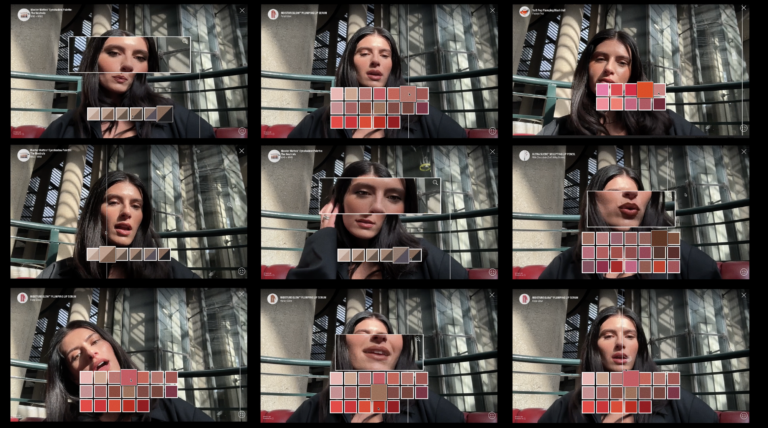
The same logic can also apply to footwear, accessories, jewelry, beauty, and lifestyle retail. Any category where visual product interaction influences purchase interest can benefit from virtual try-on.