Augmented reality marketing campaigns have moved far beyond novelty. Today, the best AR activations help brands solve real marketing challenges: attracting attention in crowded spaces, improving product visualization, increasing foot traffic, supporting try-before-you-buy journeys, and creating content people actually want to share. The examples in this article show how AR can work across very different formats — from bus shelters and storefronts to e-commerce, TikTok, and phygital product launches — while still delivering clear business value through engagement, sales, traffic, and brand memorability.
Best AR Marketing Examples Across Industries and Formats
This selection contains examples of augmented reality from different industries and campaign types, showing how AR can be adapted to very different marketing goals, channels, and customer journeys.
- OOH and public space: Pepsi Max, Maybelline
- Retail and storefronts: Kiehl’s, Fendi
- E-commerce and try-before-you-buy: IKEA Place, Makeup by Mario
- Social virality and UGC: Fenty Beauty, Monobank, Warner Bros.’ Dune: Part Two
- Phygital product experiences: Dolce & Gabbana Beauty, Bershka
Together, these cases show that AR can work as a tool for awareness, engagement, product visualization, sales, and brand storytelling across beauty, fashion, retail, entertainment, fintech, and outdoor advertising.
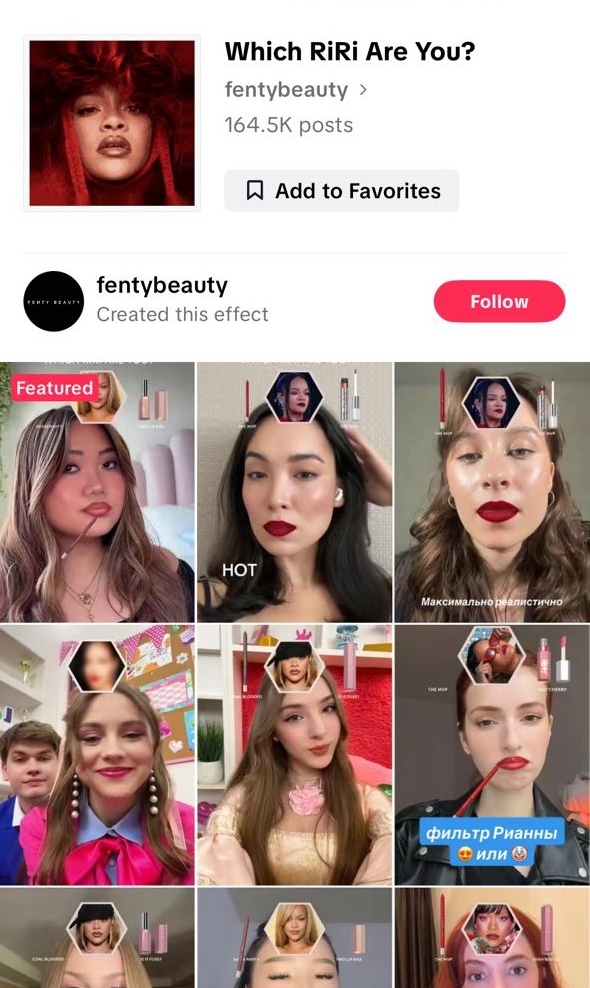
Fenty Beauty — “Which RiRi Are You?” TikTok Filter — Viral Beauty Engagement
FFFACE.ME created an award-winning augmented reality campaign for Fenty Beauty that combined viral entertainment with meaningful product integration. In just a couple of weeks, the filter generated more than 100 million impressions and inspired over 150,000 TikTok creations, showing the scale that social AR can achieve when built for participation and shareability. The project was centered around the playful mechanic “Which RiRi are you?”, inviting users to discover one of Rihanna’s iconic looks in a format designed for identity play, cultural relevance, and organic engagement. To connect the experience back to the brand, each result was paired with a beauty journey built around 20 Fenty Beauty products, helping users recreate the specific Rihanna look they were matched with. By balancing fun, virality, and practical product discovery, the campaign became a strong example of how AR can turn branded content into a high-impact beauty experience and earned industry recognition for its outstanding performance, including a Webby Award.

Pepsi Max — “Unbelievable” Bus Shelter — AR Advertising in Public Space
Pepsi Max’s “Unbelievable” Bus Shelter was an AR out-of-home campaign launched in London in 2014. Pepsi transformed a bus shelter so the front panel looked like ordinary glass, but was actually a digital screen synced with hidden cameras. This allowed commuters to see the real street scene mixed with dramatic AR illusions like a tiger, aliens, or a crashing meteor.
The idea was to turn an everyday wait at a bus stop into a shocking, highly shareable brand moment. Rather than using AR for utility, Pepsi used it for surprise, spectacle, and virality. Hidden cameras captured people’s reactions, and the project video quickly spread online. It became one of the most iconic early examples of AR advertising, showing how AR could make traditional OOH feel interactive, memorable, and culturally relevant.
Kiehl’s — AR Storefront — Turning Walk-Bys Into Walk-Ins
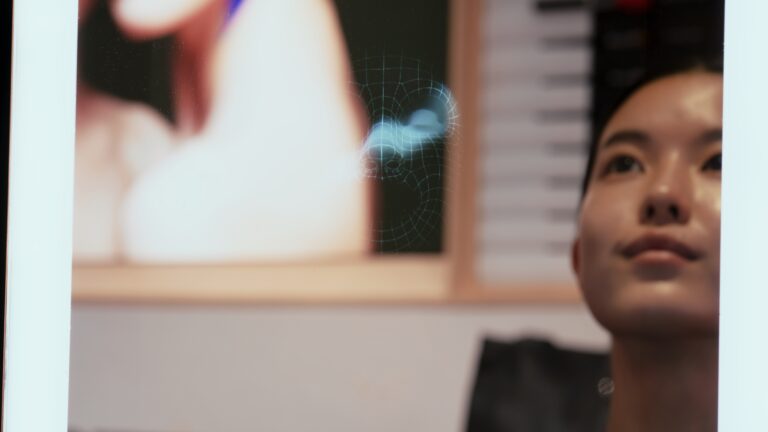
Kiehl’s transformed its storefront window into an interactive AR-powered customer acquisition tool designed to stop passersby and bring them into the store. Using real-time skin analysis, the installation visualized visible skin concerns directly on the window, turning an ordinary walk-by into a personalized beauty experience. Instead of relying on static displays, Kiehl’s used the storefront itself as a live engagement channel that encouraged people to step inside and explore tailored skincare solutions. According to Loook, the activation generated 3,118 interactions, averaged 17 activations per hour, and most importantly helped drive a 20% increase in foot traffic, showing how AR can turn a retail window into measurable performance media. Following these results, the format was expanded to additional locations and other high-impact environments.
Fendi — AR Glasses Try-On — Driving Sales in Travel Retail
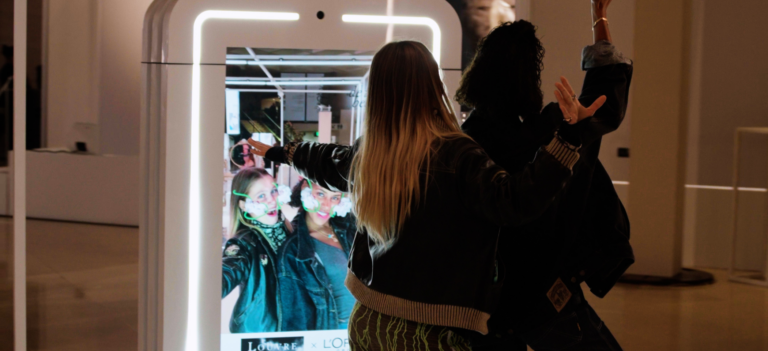
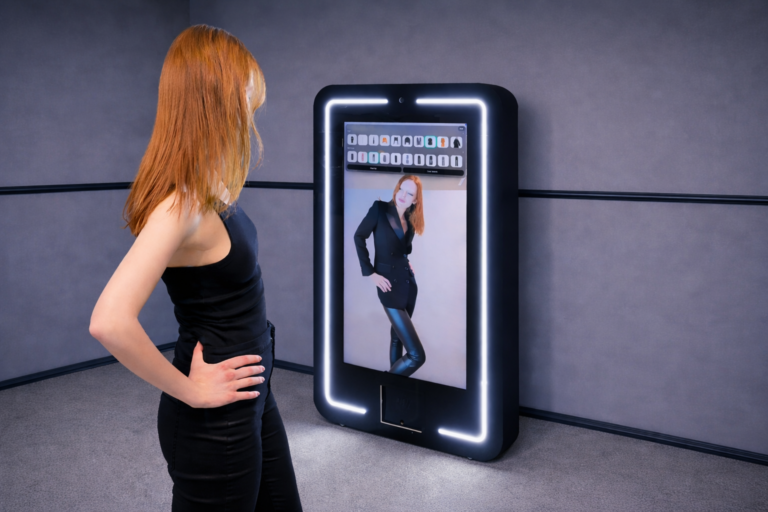
Fendi transformed the travel retail experience with a hands-free AR mirror that let airport shoppers virtually try on sunglasses in real time. Instead of browsing passively, travelers could step in front of the screen, instantly see different frames on their face, and take home a branded printed photo from the experience. Designed for a high-traffic transit environment, the activation prioritized speed, simplicity, and strong visual impact. It generated 400+ printed photos, helped the sunglasses line sell out during the activation, and delivered 43% year-over-year sales growth compared with the non-AR version. The case shows how AR can turn travel retail into an interactive experience with clear commercial results.
IKEA — Place App — AR Product Visualization Before Purchase
IKEA Place was one of the first major AR retail apps to show clear real-world value beyond novelty. Launched in September 2017 and built on Apple’s ARKit, the app let shoppers virtually place true-to-scale IKEA furniture in their own homes before buying. Users could scan a room with their phone, drop digital sofas, chairs, or tables into the space, and preview how the products would look with realistic proportions, textures, light, and shadows. IKEA said the app delivered about 98% scale accuracy, making product visualization far more practical and helping customers make more confident purchase decisions. The app became a landmark AR retail case because it showed how immersive product visualization can reduce hesitation and improve the pre-purchase experience.
Maybelline New York — AR Billboard — Large-Scale Product Launch
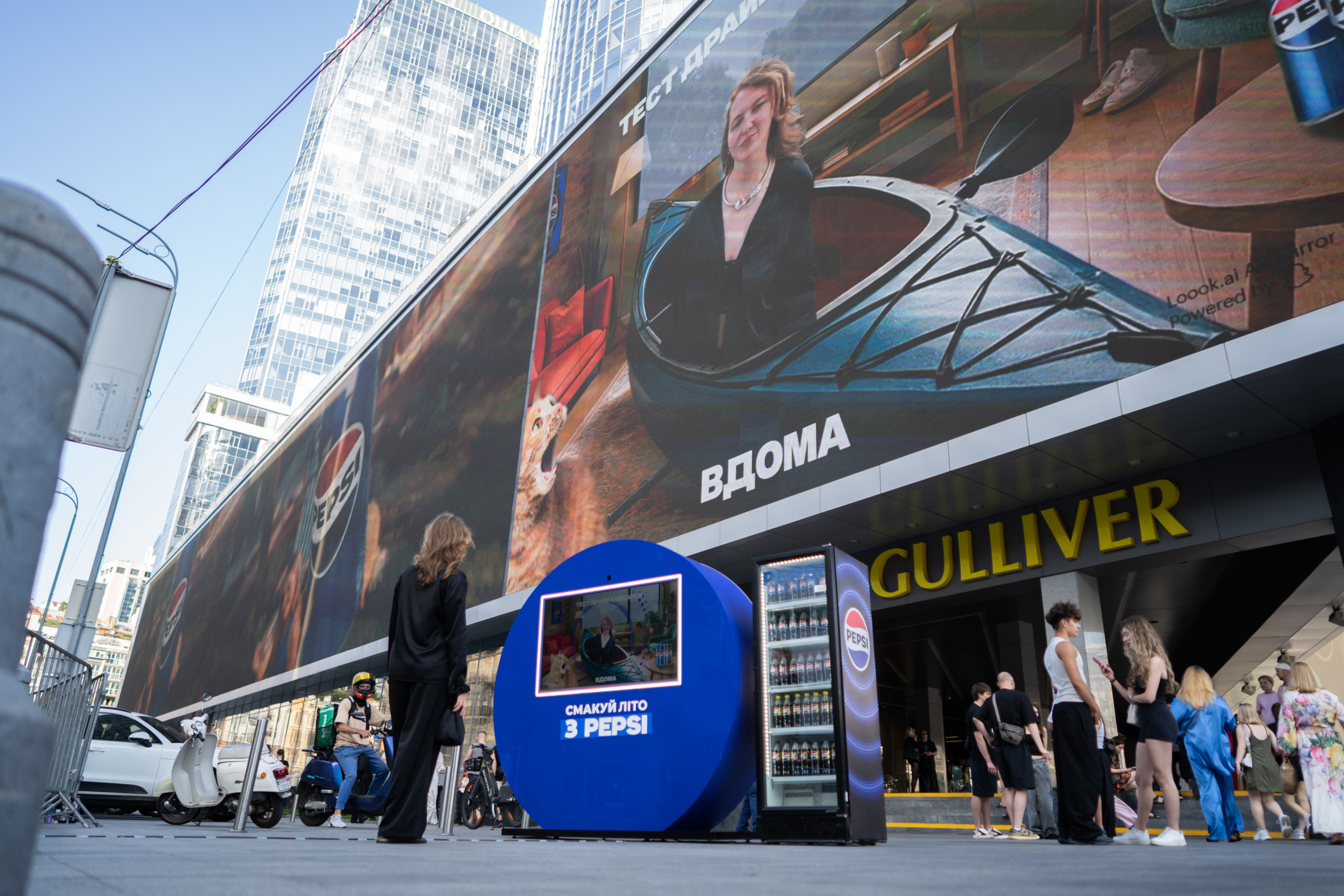
For the launch of Falsies Surreal Extensions Mascara, FFFACE created an interactive AR billboard experience for Maybelline New York, transforming a city building facade into a large-scale beauty activation. Using what Loook describes as the world’s largest AR Mirror, passersby could see themselves live on a 4,000 m² screen and virtually try on the new mascara in real time. The project combined large-format DOOH with real-time AR engagement and strong UGC potential, turning a product launch into an immersive public experience. According to the case page, the activation generated 10,000+ real-world interactions in 8 hours, 3M+ online impressions, and 10+ media mentions, showing how Loook AI can turn outdoor media into measurable, high-impact AR ads campaign.
Makeup by Mario — Website Virtual Try-On — Try Before You Buy Online
This website-based virtual try-on solution brought a true try-before-you-buy experience to beauty e-commerce by letting shoppers explore Makeup by Mario shades directly on the website in real time. Integrated with Shopify and other popular platforms, the experience combined advanced AR and AI technology to make online shopping more interactive, personalized, and low-friction, with no app download or extra steps required. Powered by Snapchat SDK, the solution delivered realistic color accuracy, smooth adaptation to different faces and lighting conditions, and seamless integration into the shopping journey. The case shows how virtual try-on can turn a traditional e-commerce site into a more immersive environment that helps customers make more confident purchase decisions.
Warner Bros. — Dune: Part Two Snapchat Lens — Immersive AR Marketing Example
Ahead of the film’s March 1, 2024 release, Warner Bros. partnered with Snapchat on an AR-led campaign designed to pull fans into the world of Arrakis instead of just showing them a trailer. The centerpiece was a Snapchat Lens that let users transform into a Fremen and appear to ride a giant sandworm, turning the movie’s visual universe into a playful, shareable mobile experience. The campaign also included custom Dune-themed Cameo stickers and video ads that linked users to a ticket-purchase microsite, connecting AR engagement with a direct conversion path. It first launched in the U.S. and Canada, then expanded to global markets on February 28, making it a strong example of entertainment marketing that combined immersion, fan participation, and ticket sales support in one social AR campaign.
Dolce & Gabbana Beauty — NFC Stickers — Phygital Beauty Experience
For the launch of the Eye Dare You Beyond Palette, Dolce & Gabbana Beauty partnered with FFFACE.ME and Celine Bernaerts to create custom NFC-enabled face stickers that blended beauty, technology, and immersive storytelling. With a single tap, users could unlock an exclusive DGMakeup AI experience, transform their look through the Bold Look AI Generator, and interact with the campaign in a more playful, personalized way. Available in Dolce & Gabbana boutiques, selected stores, and through TikTok, the activation brought the phygital beauty concept to life by connecting a physical product touchpoint with a digital AR experience. The project is a strong example of how brands can use connected beauty tech to make product launches more interactive, memorable, and shareable.
Monobank — AR Filter — Viral Reach Through Smart Distribution
For an April Fools’ Day campaign, Monobank and FFFACE.ME took an unconventional approach to AR filter distribution by promoting the experience not through Instagram alone, but directly through the bank’s app. Although Monobank had only around 50,000 Instagram followers, it had more than 2 million banking app users, so the campaign used a push notification to instantly introduce the new filter to a much wider audience. This smart distribution strategy allowed the AR experience to reach millions of users in a single day and showed that the success of an AR digital marketing campaign depends not only on the creative itself, but also on how it is delivered. The case is a strong example of how brands can amplify AR engagement by activating owned channels in unexpected ways.

Bershka — AR Clothing — Fashion Meets Digital Self-Expression
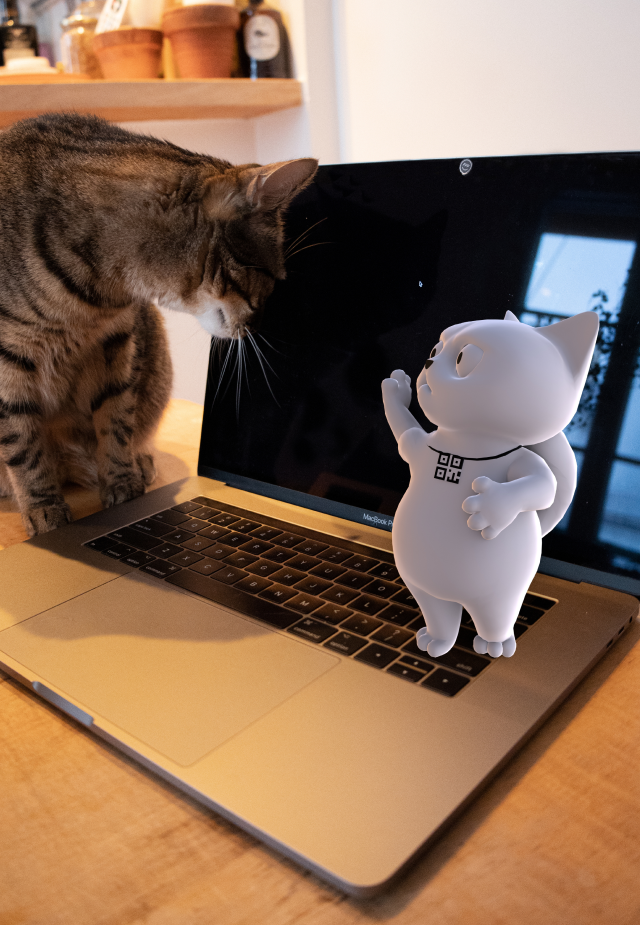
Bershka tested a phygital fashion format that adds an AR layer to selected garments. In collaboration with FFFACE.ME, shoppers could scan specific items to unlock branded digital content, turning the product into an entry point for interaction and shareable creation. What makes this approach notable is the shift from clothing as a purely physical purchase to clothing as a connected experience that continues on a phone. Overall, the case shows how AR can support self-expression and deeper engagement by extending retail products into digital touchpoints.
Why These AR Campaigns Worked
The strongest augmented reality advertising campaigns in this list succeed for different reasons, but they share a few common patterns. First, they use a simple mechanic that people understand instantly, whether that is trying on sunglasses, seeing furniture in a room, or discovering which Rihanna look matches them. Second, they reduce friction instead of adding it, often requiring nothing more than a glance at a storefront, a phone camera, or a tap. Third, they connect the experience clearly to the product, so the interaction feels relevant rather than gimmicky. And finally, they create either utility, spectacle, or shareability — ideally all three. That combination is what turns AR from a tech feature into a campaign that people remember and brands can measure.
What Brands Can Use Augmented Reality for Marketing Campaigns?
The main takeaway is that great AR marketing campaigns are not defined by the technology alone. What makes them effective is how well the format matches the marketing goal. If the objective is awareness, AR can make OOH more interactive and attention-grabbing. If the goal is conversion, it can support try-before-you-buy and product visualization. If the goal is engagement, it can create experiences people want to share. The best campaigns do not use AR just because it looks futuristic — they use it because it makes the brand interaction more useful, more immersive, or more memorable than traditional media could.
Conclusion
The best AR advertising campaigns show that immersive marketing is no longer limited to experimental tech or one-off stunts. AR is now being used across retail, e-commerce, social media, entertainment, and product launches to drive measurable outcomes like foot traffic, sales, product confidence, and viral reach. Whether the format is a storefront, a website try-on, a Snapchat Lens, or a city-scale billboard, the most effective campaigns all do the same thing: they give people a more interactive way to experience the brand.
FAQ
What makes an AR marketing campaign successful?
A successful AR campaign combines a clear interaction mechanic, low friction, and a strong connection to the product or brand message. The best examples also deliver either real utility, strong entertainment value, or high shareability.
What industries use AR campaigns most effectively?
AR is especially effective in beauty, fashion, retail, home furnishing, entertainment, and outdoor advertising because these categories benefit from visualization, personalization, and immersive storytelling. The cases in this article show strong examples across all of these sectors.
Are AR campaigns only for big brands?
No. While many famous AR campaigns come from global brands, the Monobank example shows that creative distribution and a strong idea can be just as important as budget. AR can work for smaller brands too when it is tied to the right channel and use case.
What is the difference between AR ads, AR filters, and virtual try-on?
AR ads usually refer to broader branded activations in paid media or public space, AR filters are often social experiences built for participation and sharing, and virtual try-on is a more product-focused use case designed to help customers preview items before purchase. In practice, many campaigns combine these formats.
Can AR campaigns drive sales, not just engagement?
Yes. The cases in this article show that AR can support measurable outcomes beyond views and interactions, including higher foot traffic, product sell-outs, improved product confidence, and year-over-year sales growth.