Key Takeaways
- Virtual try-on helps shoppers make more confident purchase decisions, which can improve conversion and reduce returns.
- It usually combines AR, computer vision, and AI to place products onto a user in real time.
- The strongest use cases today include beauty, eyewear, accessories, and fashion.
- Virtual try-on helps connect online and in-store journeys, making omnichannel shopping more seamless.
- A practical first step for many brands is to pilot it in cosmetics or eyewear, where the value is often easiest to prove.
What Is Virtual Try-On Technology?
Virtual try-on technology is a transformative digital solution that significantly enhances the e-commerce customer journey. By leveraging device cameras and sophisticated software algorithms, it enables real-time product visualization – allowing customers to preview how items like apparel, cosmetics, or accessories would appear on them before making a purchase decision. This technology drives conversion rates and reduces returns by providing customers with the confidence they need to make informed purchasing decisions, effectively bridging the gap between online and in-store experiences.
The adoption of virtual try-on has transformed digital retail, with leading brands integrating it to complement their existing channels. The technology excels in cosmetics, offering precise color matching and application visualization. In fashion, virtual fitting rooms show detailed garment previews, while eyewear applications provide frame visualization from multiple angles. This integration naturally evolves retail experiences by connecting digital and physical shopping environments while upholding exceptional presentation standards.
Key Technologies Behind Virtual Try-On
Virtual fitting technology combines advanced digital tools to create an immersive and realistic shopping experience. These tools work together seamlessly to make digital products—clothing, accessories, and makeup—appear natural on the user.
At the core lies computer vision (AI vision) and image processing. These technologies map key points on facial features, body shapes, and hand structures to ensure products are placed accurately in real-time. Augmented reality (AR) and virtual reality (VR) project digital objects onto live camera feeds, making products appear natural as users move and lighting conditions change. 3D modeling and simulation create realism by accurately reproducing textures, materials, and fabric behavior. Physics-based rendering shows realistic movement—like how dresses flow or earrings reflect light. Machine learning and AI analyze user preferences, purchase history, and body measurements to offer personalized recommendations and better fit accuracy. Integration and user interface (UI) design ensure the technology is easy to use and runs smoothly across all devices.
Together, these technologies create a seamless, interactive, and personalized virtual fitting room experience that transforms online shopping.
A New Era of AI Clothing Try-On
AI virtual clothing try-on introduces a new generation of fashion discovery, allowing customers to instantly see themselves in different garments without changing clothes, entering a fitting room, or relying on traditional 3D product models. Using advanced AI, the technology generates realistic outfit visualizations in real time, making it possible to explore multiple styles, colors, and complete looks within seconds. For brands, it creates a faster, more innovative shopping experience that increases engagement, encourages product exploration, and turns the first interaction with a collection into a memorable digital experience.
How Does Virtual Try-On Technology Work?
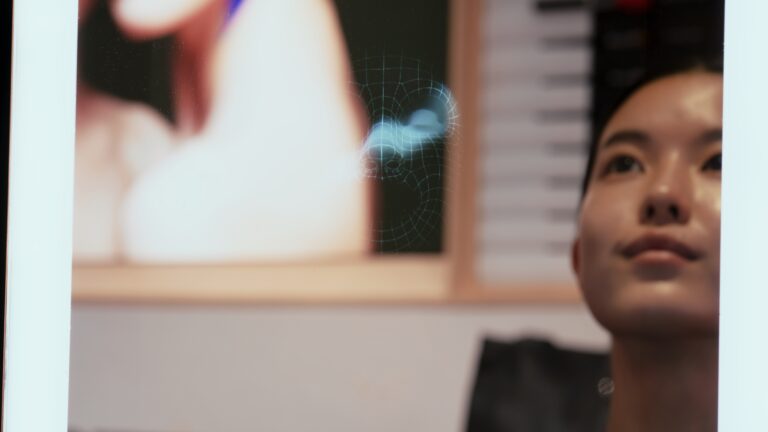
Virtual try-on technology works by combining a live camera feed or uploaded photo with AR, AI, and computer vision to place digital products onto a person’s face, body, or surroundings in real time. The system first detects key features such as facial landmarks, body shape, or hand position, then tracks movement and maps the selected product to the right area so it stays aligned as the user moves. In more advanced solutions, AI helps improve realism by adjusting fit, proportions, lighting, and product behavior based on the user and the product category. This allows shoppers to preview items such as clothing, eyewear, makeup, or accessories in a more interactive and personalized way before making a purchase.
@ffface.me 💋Monochrome virtual try-on for @pradabeauty. Find the filter on Prada Beauty page💋 #augmentedreality #virtualtryon #pradabeauty
♬ Requiem for a Hit – Miss Kittin & Laurence Williams
Applications of Virtual Product Try-On
Virtual try-on technology is revolutionizing multiple industries, making shopping more interactive, personalized, and convenient.
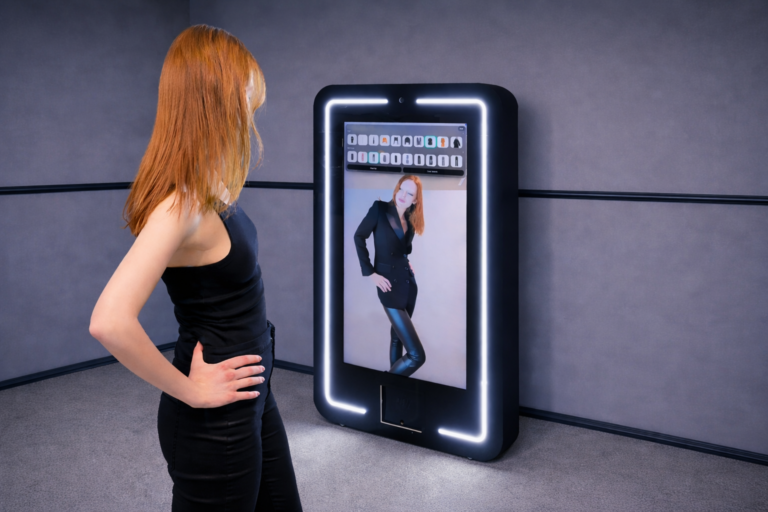
- Virtual apparel try-on: Virtual fitting rooms use AI-powered avatars and body scanning to help shoppers find the perfect fit online. Brands like ASOS and Adidas offer virtual size recommendations, reducing uncertainty and bridging the gap between digital and physical retail.
- Eyewear and accessories: AR-powered tools from Warby Parker and Ray-Ban let users try on glasses, hats, and jewelry via smartphones. This enhances confidence in purchases by allowing customers to see how different styles suit their features.
- Virtual makeup try-on: Brands like Sephora, MAC Cosmetics, and L’Oréal use AR and facial recognition to let customers test lipsticks, foundations, and eyeshadows in real time. This helps shoppers find the perfect shade and reduces product returns.
- Footwear: Nike and Gucci use 3D scanning and AR to help customers visualize how shoes fit and look from different angles. Motion tracking enhances realism, reducing the risk of ordering the wrong size.
- Emerging sectors: IKEA’s AR tools allow customers to place furniture in their space before purchasing, while Porsche offers virtual car customization. Industries like healthcare and interior design are also exploring online try-on solutions.
Virtual try-on is transforming shopping by making it more interactive, personalized, and efficient, enhancing both customer experience and brand engagement.
Comparing Different AR Try-On Formats
| Format | Best for | Main advantage | Main limitation | Typical use cases |
|---|---|---|---|---|
| Web AR | Fast-access campaigns and e-commerce | No app download required, lower friction | Usually less powerful than app-based experiences | Beauty try-on, eyewear try-on, product previews, campaign activations |
| Native App AR | Brands with an active mobile app ecosystem | Stronger performance, deeper personalization, better long-term retention opportunities | Requires app download, higher entry barrier | Loyalty-driven shopping, personalized try-on, connected mobile commerce |
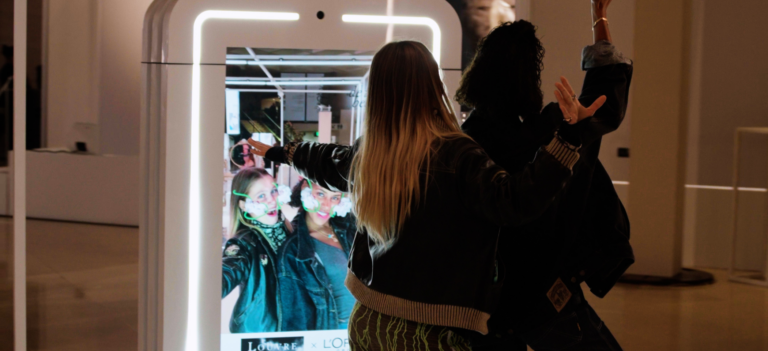
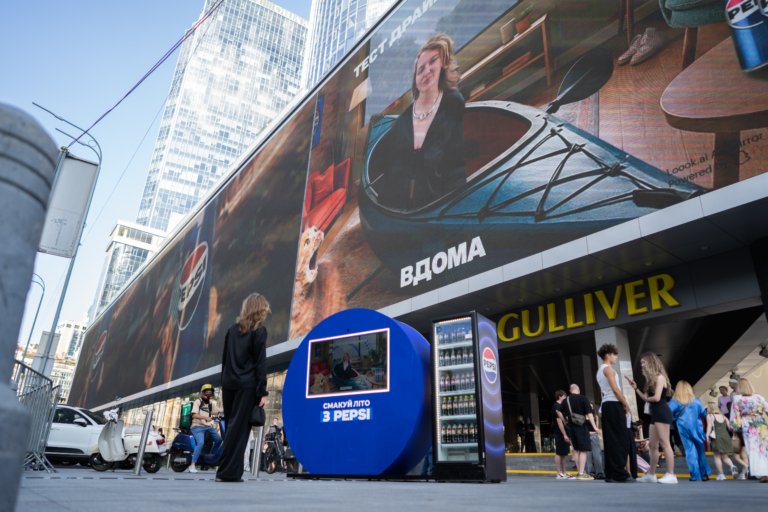
| In-Store AR Mirrors | Physical retail and experiential spaces | High engagement, strong brand impact, bridges digital and store experience | Requires hardware, installation, and operational support | Fashion retail, beauty retail, pop-ups, activations, smart fitting experiences |
Virtual Product Try-On Examples by FFFACE
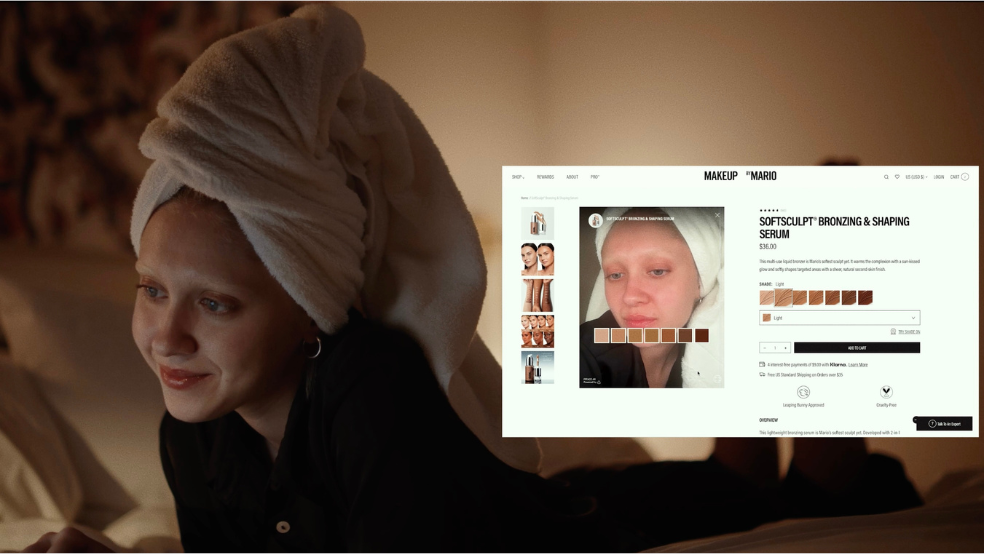
Try Before You Buy Experience for Makeup by Mario Website
This innovative digital experience allows customers to preview products in real time before making a purchase. Integrated directly into the Makeup by Mario website, this feature leverages augmented reality (AR) technology to offer a seamless and hyper-realistic virtual AR beauty try-on experience for a variety of makeup products.
How It Works
Users can access the try-on feature on the product pages, where they can instantly see how different shades and finishes look on their own face using their device’s camera. The AR-powered technology maps facial features with precision, ensuring a natural and accurate application of each product.
Try Featured Products in Virtual Try-On:
- SuperSatin® Lipstick: Try on different shades of this satin-finish lipstick to find the perfect color for your skin tone.
- SurrealSkin™ Foundation: Experience how the foundation blends with your complexion before purchasing.
- Ultra Suede® Sculpting Lip Pencil: Test different lip liner shades to see how they define and shape your lips.
- Master Mattes® Eyeshadow Palette: Virtually apply different matte eyeshadow shades to create your ideal eye look.
Why It’s a Game-Changer
This virtual try-on feature enhances the online shopping experience by reducing uncertainty and boosting customer confidence in product selection. By allowing shoppers to visualize shades and textures in real time, Makeup by Mario ensures that customers can make informed decisions, leading to higher satisfaction and fewer returns. FFFACE’s cutting-edge AR technology brings a personalized and interactive touch to beauty e-commerce, setting a new standard for digital makeup shopping.
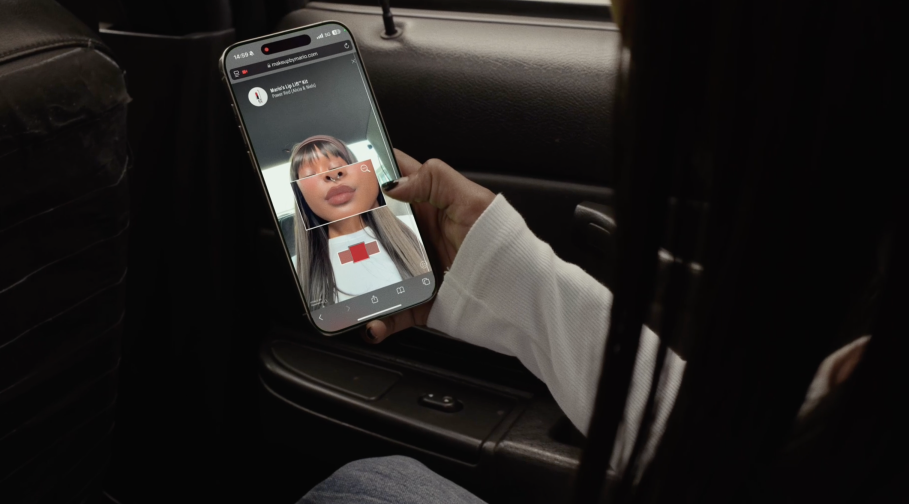
FFFACE x Fendi: Elevating Luxury Eyewear with Virtual Try-On Technology
FFFACE Studio partnered with Fendi to create an innovative virtual glasses try-on experience, allowing customers to seamlessly explore the brand’s eyewear collections. Using augmented reality (AR) and advanced face-tracking technology, the virtual try-on feature accurately maps the user’s facial structure, ensuring a realistic and precise fit. This digital experience enables shoppers to see how different Fendi frames complement their face shape, helping them make informed purchase decisions. The high-quality 3D rendering replicates intricate design details, materials, and lens reflections, preserving the luxury aesthetic of Fendi eyewear. By integrating this cutting-edge solution, Fendi sets a new standard for luxury retail innovation, blending heritage craftsmanship with modern technology to engage a new generation of customers.
@ffface.me Meet @Fendi’s first hands-free instant print AR Mirrors at the Istanbul Airport✈️ #digitalmarketing #fendi #istanbul #armirrors #augmentedreality
♬ I understand – hibiz
Benefits of Virtual Try-On Implementation for E-commerce
Virtual try-on technology offers a wide range of benefits that enhance both the customer experience and business operations.
- Bridging the Gap Between Online and In-Store Shopping: Virtual try-on isn’t just a convenience—it’s a necessity in the digital shopping era. It eliminates the guesswork of online purchases by offering an experience that closely mirrors physical try-ons, making e-commerce more reliable and engaging.
- The Power of AI and Personalization: The real magic of virtual try-on lies in AI-driven personalization. As machine learning algorithms refine recommendations based on facial features, skin tone, or body shape, brands can offer hyper-personalized experiences, making shopping feel tailored to each individual.
- Reducing Returns and Boosting Sustainability: In fashion and beauty, returns due to poor fit or mismatched shades are a costly challenge. Virtual try-on significantly reduces these issues by allowing customers to preview products accurately before buying—saving brands money and improving customer satisfaction.
- AR as a Marketing Tool, Not Just a Utility: Virtual try-on isn’t just about function—it’s a powerful engagement tool. By making shopping more interactive and playful, it turns product exploration into an experience rather than a transaction, increasing time spent on a brand’s platform and driving higher conversions.
- Better Inventory Management: Provides data insights on customer preferences and popular products. Helps brands optimize stock levels and avoid overproduction.
- Competitive Advantage: Positions brands as innovative and tech-forward in their industry. Attracts younger, tech-savvy consumers who expect digital shopping enhancements.
Virtual try-on is no longer just a futuristic concept—it’s a practical, game-changing tool that enhances shopping experiences for customers while providing tangible benefits for businesses.
How to Choose Virtual Try-On Software
When choosing virtual try-on software, brands should look beyond the demo and focus on how well the solution performs in real business conditions. A strong platform should combine realistic visualization, smooth performance, and an easy user experience across the channels that matter most, whether that is e-commerce, mobile, in-store screens, or smart mirrors. It is also important to understand how scalable the system is, how quickly new products can be added, how much manual work is required, and whether the solution can support larger catalogs over time. The right virtual try-on software should not only look impressive but also help drive measurable results such as engagement, product discovery, dwell time, and conversion.
Questions to ask a provider:
- How realistic is the try-on experience for our product category?
- How much manual work is needed to add or update products?
- Can the solution scale for large assortments or multiple campaigns?
- Which devices and channels do you support?
- What analytics and reporting are included?
- How customizable is the experience for our brand?
- What are the technical or hardware requirements?
- How long does deployment take?
- What support do you provide after launch?
- Do you have case studies or benchmarks from similar brands?
Recent Advancements, Trends, and the Future of Virtual Try-On Technology
Recent advancements in virtual try-on technology are making these experiences more realistic, intelligent, and scalable. Improvements in AR, AI, computer vision, and biometric analysis are helping brands deliver try-on experiences that better reflect fit, movement, proportions, and personal features. In fashion, this means more accurate size and fit recommendations based on body shape, posture, and motion. In beauty, it means more precise product visualization and more relevant recommendations based on skin tone, facial features, style preferences, or shopping context.
One of the biggest trends shaping virtual try-on technology is the growing role of AI. AI try-on is improving realism, speeding up product onboarding, and making experiences more adaptive and personalized. Instead of offering the same static try-on to every shopper, AI can help tailor recommendations based on past behavior, current intent, or real-time interaction. It can also enhance rendering quality, improve how products respond to movement, and make it easier for brands to scale try-on across larger catalogs.
Another major trend is the rise of omnichannel retail integration. Virtual try-on is no longer limited to a single channel. It is increasingly being used across e-commerce, mobile, in-store screens, and smart mirrors to create more connected shopping journeys. A shopper might try on a product at home, save their preferences, and continue the experience later in a physical store. This makes virtual try-on a stronger bridge between digital and physical retail.
Looking ahead, the future of virtual try-on technology will be defined by hyper-personalization, better realism, and deeper integration into the retail journey. As the technology continues to evolve, virtual try-on will become less of a novelty feature and more of a core commerce tool that supports product discovery, decision-making, and customer engagement across multiple touchpoints.
Conclusion
Virtual try-on is no longer a futuristic concept—it is a revolutionary technology shaping the present and future of retail. By enhancing personalization, reducing returns, and expanding into new industries, it is creating a more engaging, efficient, and sustainable way to shop. As AI, AR, and machine learning continue to advance, virtual try-on will only become more immersive, making it an indispensable tool for brands looking to stay ahead in the digital shopping era.
FAQs
How long does it take to launch a virtual try-on experience?
Implementation timelines depend on the format, product category, and level of customization. Simple web-based experiences can usually be launched faster, while native app integrations or in-store AR mirror deployments often require more technical setup, testing, and operational planning.
Do we need a mobile app to offer virtual try-on?
No. Many brands start with Web AR because it is easier to access and removes the friction of an app download. Native apps can still be valuable when a brand wants deeper personalization, stronger retention, or tighter integration with a broader mobile ecosystem.
Does virtual try-on only work for e-commerce?
No. It can work across e-commerce, mobile, in-store screens, smart mirrors, and experiential activations. For many brands, its value increases when it connects digital discovery with in-store engagement.
How scalable is virtual try-on for large product catalogs?
That depends on the platform. Some solutions require significant manual setup for each item, while others use AI and automation to make product onboarding, updates, and catalog expansion much faster.
How realistic can the experience be?
Realism depends on the technology, the category, and the quality of product preparation. The strongest solutions combine AR, AI, and computer vision to improve fit, alignment, lighting, movement, and overall visual consistency.
How does AI improve virtual try-on?
AI can make virtual try-on more adaptive, realistic, and scalable. It can improve rendering quality, support smarter recommendations, speed up product onboarding, and personalize the experience based on user behavior, preferences, or shopping intent.
What should brands ask about privacy and compliance?
Brands should ask how facial, body, or behavioral data is handled, whether GDPR consent is required, how long data is stored, and whether the solution supports relevant privacy and compliance requirements. Clear user consent and transparent data practices are important.