Key Takeaways
- AR turns OOH advertising from a passive format into an interactive brand experience.
- Instead of only viewing a billboard, poster, storefront, or screen, people can scan, try, play, create, and share.
- The main value of AR OOH is the combination of physical visibility and digital interaction.
- Brands can use AR OOH to connect high-traffic locations with mobile experiences, AR try-ons, branded filters, CGI content, product pages, and social sharing.
- AR OOH works especially well for beauty, fashion, entertainment, retail, and lifestyle brands because these industries depend on visual storytelling, product discovery, and memorable launch moments.
- Compared with traditional OOH, AR-powered campaigns are easier to measure through scans, interactions, dwell time, shares, clicks, photo downloads, and product engagement.
- The growth of OOH, DOOH, AR, and QR code adoption shows that outdoor advertising is moving toward more flexible, measurable, and interactive formats. The future of OOH is not only about bigger screens or louder visuals. It is about creating outdoor campaigns that people can interact with, remember, and share.
The Impact of Augmented Reality on Out-of-Home Advertising
AR is redefining the evolution of OOH, changing not just the box of consumer connections but raising the game for an old format in itself-the billboard. AR can shift this from merely a static display into immersive and convincing engagement that creates uncompromised attention and visibility for brands. Thus, the interaction by consumers of digital content on physical advertisements engages with memorable, brand-immersive experiences. The seamless integration with mobile devices furthered by mainstream adoption of QR codes places AR in a very well-positioned setting to create lasting impact for brands.
Statistics: Why AR OOH Advertising Is Growing Now
Out-of-home advertising is becoming more digital, measurable, and interactive, creating the right environment for AR-powered OOH campaigns. As brands look for ways to make physical media more engaging, the growth of OOH, DOOH, AR, and QR-based interaction shows why augmented reality is becoming a stronger part of outdoor advertising.
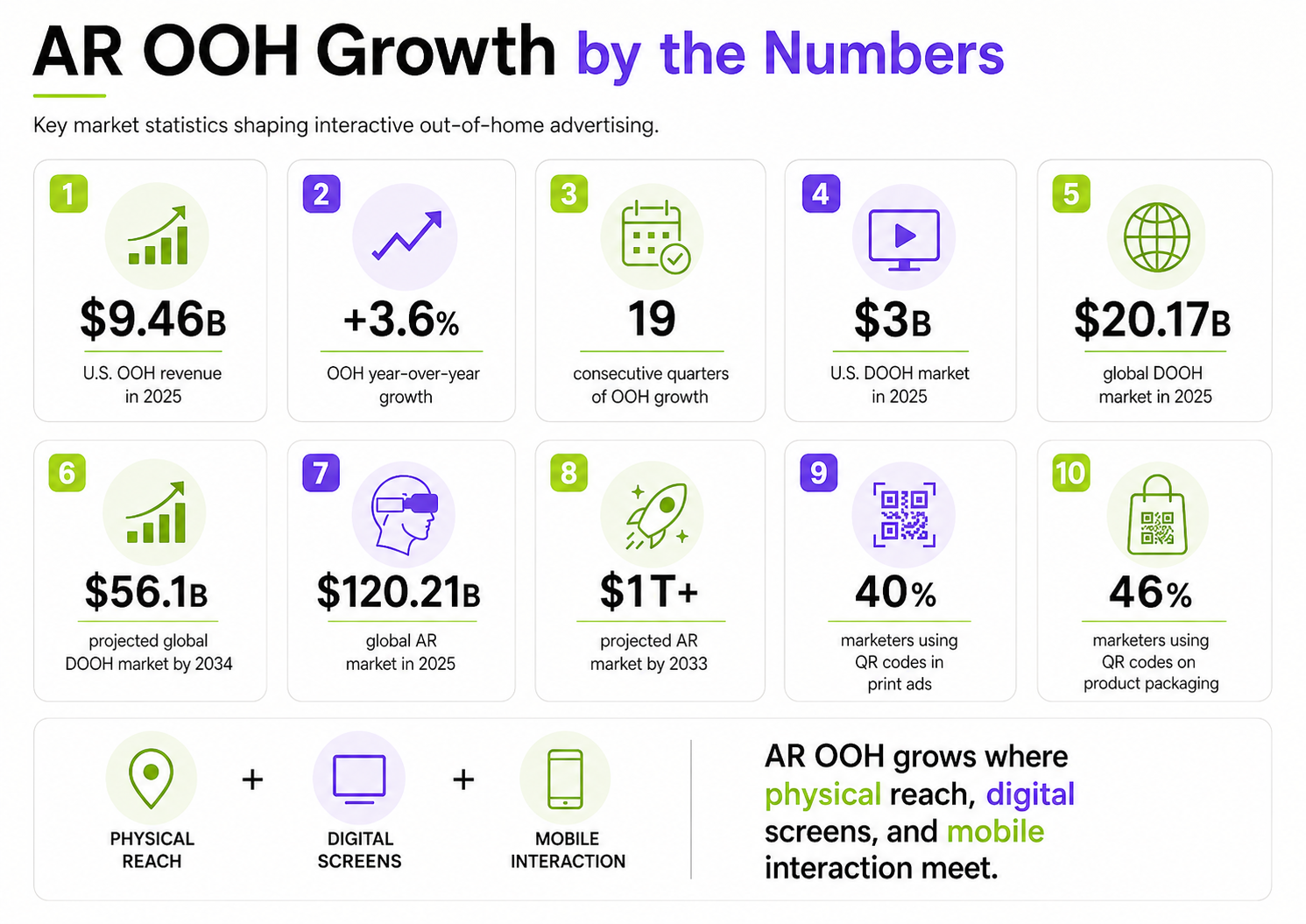
In the U.S., OOH advertising reached a record $9.46 billion in revenue in 2025, growing 3.6% year over year and marking 19 consecutive quarters of growth. This shows that physical advertising remains a strong media channel, even as digital advertising becomes more competitive and fragmented.
Digital out-of-home is also gaining momentum. The U.S. DOOH market is expected to reach $3 billion in 2025, while the global DOOH market is projected to grow from $20.17 billion in 2025 to $56.1 billion by 2034. This shift matters because digital screens make outdoor advertising more flexible, easier to update, and better suited for interactive formats such as AR billboards, smart screens, storefront activations, and mobile-connected experiences.
At the same time, augmented reality is scaling as a mainstream technology category. The global AR market was estimated at $120.21 billion in 2025 and is projected to surpass $1 trillion by 2033. Another estimate values the AR market at $140.34 billion in 2025, showing strong long-term growth expectations across AR use cases.
Consumer behavior also supports this shift. Bitly reports that 40% of marketers use QR codes in print ads and 46% use them on product packaging. For OOH campaigns, QR codes are especially important because they make it easier to connect physical placements with digital experiences, including WebAR, mobile landing pages, product try-ons, campaign filters, and interactive content.
Together, these numbers show why AR OOH is gaining momentum. OOH delivers visibility, DOOH adds flexibility, QR codes connect offline media to mobile interaction, and AR turns that interaction into a more memorable brand experience. For beauty, fashion, retail, entertainment, and lifestyle brands, this creates a new opportunity to use outdoor media not only for reach, but also for engagement, participation, product discovery, and measurable campaign actions.
Benefits and Limitations of Out-of-Home Advertising
Out-of-home (OOH) advertising offers powerful advantages for brands aiming to boost visibility in high-traffic areas. Its ever-present, non-skippable nature makes it hard to ignore, helping build long-term brand recognition and trust. OOH works especially well for local targeting and can support bold, creative formats like 3D installations or AR-enhanced billboards that leave a lasting impression. When used as part of an omnichannel strategy, it complements digital efforts by reinforcing brand presence in the physical world.
However, OOH also has limitations. It offers less precise targeting compared to digital ads and often comes with higher costs in premium locations. Measuring return on investment can be challenging without added tech like QR codes or AR integrations, and once a campaign is live, it can’t be adjusted in real time. Plus, with short viewer attention spans, content must be instantly engaging and clear to make an impact.
Interactive AR OOH vs Traditional: What’s the Difference?
Traditional out-of-home (OOH) advertising—like static billboards, posters, and transit ads—relies on passive exposure. It’s designed to deliver a one-way message to a broad audience, usually based on location. While it can be effective for brand awareness and visibility, it lacks interactivity, personalization, and real-time feedback. Once the campaign is live, there’s little room for adjustment, and measuring its true impact is often limited to rough impressions.
Interactive AR OOH, on the other hand, brings these physical ads to life through augmented reality. Instead of just seeing a message, viewers can engage with it—scanning a QR code to try on a product virtually, play a branded AR game, or unlock personalized content. This interactivity increases memorability, emotional connection, and shareability. Plus, brands gain access to real-time analytics, tracking engagement, dwell time, and conversions. Although AR OOH may require a higher upfront investment, it often delivers stronger ROI thanks to measurable impact and the ability to adapt content dynamically.
In short, while traditional OOH builds reach, interactive AR OOH builds relationships.
Why Businesses Should Embrace AR in OOH Advertising
AR integration in OOH advertising delivers powerful benefits beyond traditional media. Here are the key advantages:
Increased Engagement
AR transforms passive viewers into active participants, creating longer and more personalized interactions with ads. When users scan QR codes or interact with 3D models, they become immersed in the experience—making it more memorable and likely to drive conversions.
Enhanced Brand Visibility
AR turns static billboards into dynamic, interactive experiences that naturally attract attention. In busy public spaces, these interactive elements make the ad stand out, boosting brand recognition and awareness.
Emotional Connection
AR creates immersive experiences that build emotional connections with brands. Through virtual try-ons and meaningful interactions, users become active participants—deepening their involvement and strengthening their loyalty and trust.
Social Media Amplification
AR ads inspire users to share their experiences on social media, multiplying the campaign’s impact. Through shareable elements like playful filters and interactive features, brands naturally expand their reach and boost engagement far beyond the original audience.
More Personalization
AR campaigns enable deep customization, letting users tailor their experiences to match their preferences—such as modifying product features or appearance in real time. This personalized approach transforms ads into targeted recommendations, boosting both engagement and brand loyalty.
Location-Based Experiences
AR ads leverage real-time geolocation to deliver contextual content based on a viewer’s location. When someone passes a billboard, they can instantly access nearby promotions and event information, creating a more relevant and engaging advertising experience.
Advanced Data Analytics
AR provides detailed insights into how people interact with ads, enabling marketers to build more effective campaigns. This data helps brands fine-tune their messages and enhance engagement instantly.
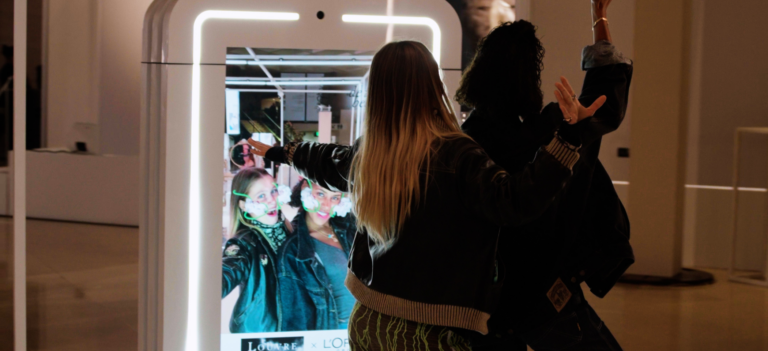
@ffface.me In our fourth collaboration with @BERSHKA, we launched the #AR Showcase with a #Virtualtryon at the Madrid Flagship Store. With the help of our exclusive analytics feature, we measured the results and saw that there were over 10,000 unique interactions with FFFACE.ME AR Mirrors during the first weekend 🤯 Two AR Mirrors allow to seamlessly try on items from the new ʼGENʼ #Bershka collection without entering the store, captivate the attention of future customers, and drive traffic inside the store. #AR #XR #snapar
♬ original sound – FFFACE – AR FILTERS
Inspiring AR Billboard Campaign Examples
AR has transformed OOH advertising through innovative, attention-grabbing campaigns worldwide. Let’s explore some standout examples:
Maybelline: Pioneering AR Mirror Technology in OOH Advertising
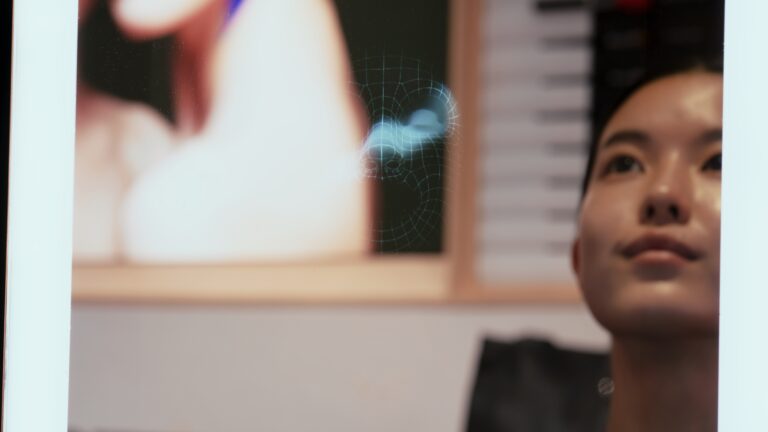
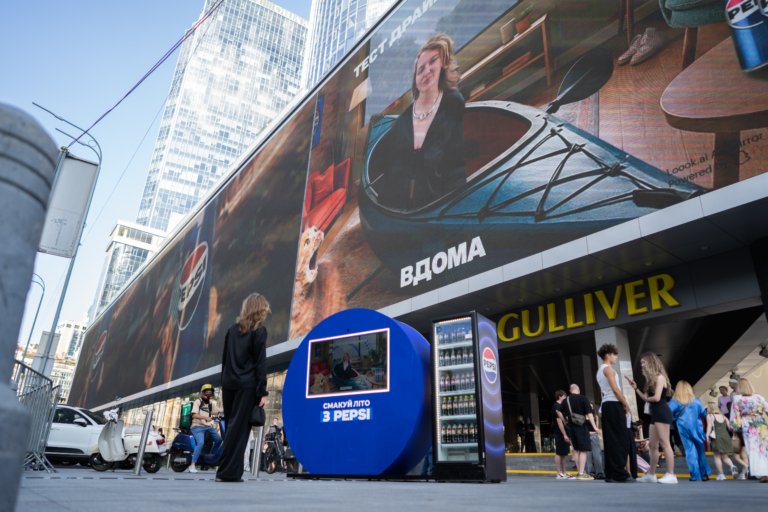
FFFACE.ME recently unveiled the world’s largest AR mirror at Kyiv’s Gulliver Mall for Maybelline New York, spanning an impressive 4,000 square meters. This groundbreaking installation transformed a traditional advertising screen into an interactive augmented reality billboard, enabling visitors to try on Maybelline’s latest mascara virtually in real-time. What was once a standard advertisement became a personalized, immersive experience.
The era of passive advertising is ending. Just as online ads face “banner blindness,” traditional OOH ads struggle to maintain engagement. Through interactive technology, we’re breathing new life into the industry. Our Maybelline collaboration marks a pivotal moment, showcasing AR’s boundless potential.
According to Alina Odolska, group brand manager for Maybelline NY, the AR mirror campaign has already generated over 3 million organic views and mentions—with more data still under analysis.
Times Square Transformed: A FOOH 3D Experience for Ralph Lauren Fragrances
FFFACE.ME turned Times Square into a dazzling display for Ralph Lauren Fragrances’ newest men’s fragrance, Polo 67. We have designed a dynamic and captivating FOOH experience that captures the pulsating heart of New York City.
The campaign was supported by a CGI experience that went far beyond the traditional idea of advertising. It became a visual masterpiece, lighting up Times Square with vibrant colors and energy while capturing the essence of Polo 67 in a bold, immersive style. The campaign stood out in a crowded media environment by turning a public screen into an interactive brand experience.
L’Oréal’s CGI-Enhanced Haircare Campaign: Creating Impact in OOH Advertising
FFFACE.ME teamed up with L’Oréal to showcase the latest hair care product with a visually stunning CGI video on one of Europe’s largest shopping mall screens. The campaign was used to engage shoppers through the maximization of immense display space for a dynamic, eye-catching experience.
Instead of running a regular ad, the video created a visual experience that melded CGI magic with interactive components. We married the very latest in digital visuals with real-world OOH for a clear message of key product benefits. There was the hair, moving in mesmerizing waves within CGI animations, personifying smooth, silky, radiant hair-just what your hair promises.
How to Implement AR in OOH Advertising
Launching an AR OOH campaign is not only about adding a QR code to a billboard. The strongest campaigns connect the physical location, creative idea, technology, user interaction, and campaign metrics into one experience.
1. Define the campaign goal
Start with the business objective. AR OOH can support awareness, product launches, store visits, product trial, social sharing, lead generation, or stronger engagement around a campaign moment.
For example, a beauty brand may use AR OOH to let people virtually try on a new mascara or lipstick shade. A fashion brand may turn a storefront into an interactive try-on experience. An entertainment brand may use AR to make a movie, game, or launch feel more immersive in a public space.
2. Choose the right AR OOH format
The format should match the campaign goal, audience behavior, and physical location. A busy street may work better with a fast QR-based WebAR experience, while a mall, airport, event, or flagship store can support a longer AR mirror or smart screen interaction.
Brands can use QR-based billboards, AR mirrors, smart screens, interactive storefronts, AR posters, transit ads, or AR photo booths. CGI and FOOH content can also support the campaign by extending the physical activation into social media and PR.
3. Build the interaction around the user
AR OOH needs to be easy to understand in seconds. People should instantly know what to do, why they should interact, and what they will get from the experience.
A strong activation usually has a clear call to action, fast entry point, instant visual result, and simple way to save or share the content. The interaction can invite users to try on a product, unlock a 3D object, transform their reflection, play with a branded effect, take a photo, scan a product, or visit a campaign landing page.
The key is to make the experience feel useful, entertaining, or surprising — not forced.
4. Connect the placement with digital tracking
One of the biggest advantages of AR OOH is that it makes outdoor advertising more measurable. Before launch, brands should decide what success looks like and which actions need to be tracked.
Useful metrics can include QR scans, unique users, completed interactions, dwell time, photo or video captures, social shares, website clicks, product page visits, coupon redemptions, leads, and store visits where trackable. For screen-based AR experiences, brands can also track session volume, average engagement time, popular effects, product-level interactions, and repeat usage.
This gives marketers more than estimated impressions. It helps them understand how people actually interacted with the campaign.
5. Prepare the creative and technical setup
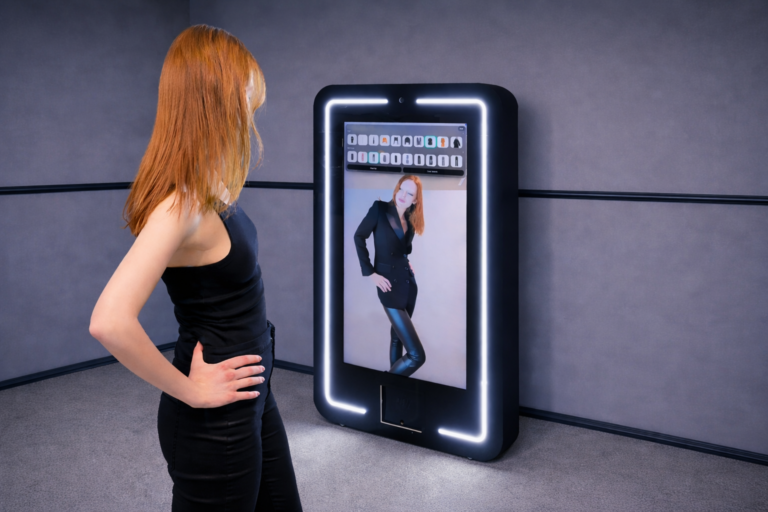
The technical setup depends on the chosen format. A WebAR billboard may require a QR code, mobile landing page, AR experience, and analytics setup. An AR mirror or smart screen may require a display, camera, computer, software, internet connection, and on-site installation planning.
Before launch, teams should test visibility, lighting, QR placement, loading speed, camera position, internet stability, user flow, privacy requirements, and technical support. This is especially important in high-traffic locations where the experience needs to work smoothly for many users in a short time.
6. Launch, monitor, and optimize
After launch, the campaign should be monitored in real time or near real time. If people are not scanning, the call to action may need to be clearer. If users start the experience but leave quickly, the interaction may be too slow, complicated, or not visually rewarding enough.
Unlike static OOH, AR OOH can often be adjusted during the campaign. Brands can update screen content, improve instructions, test different effects, change sharing prompts, adjust the landing page flow, or optimize QR placement based on real user behavior.
7. Turn campaign data into insights
After the campaign, reporting should go beyond reach and impressions. AR OOH allows brands to evaluate participation: how many people interacted, how long they stayed, what they tried, what they shared, and which actions they took next.
A strong post-campaign report should show total interactions, interaction rate, average session duration, top-performing locations, most-used effects or products, share rate, click-through rate, conversion actions, and key learnings for future campaigns.