Key Takeaways
- Beauty tech is moving from novelty to standard practice in the beauty industry, powered by AI, AR, virtual try-on, smart devices, and data analytics.
- AI helps brands personalize recommendations, analyze skin needs, improve customer support, and turn beauty data into more relevant product experiences.
- AR and virtual try-on make product discovery more interactive by letting customers test makeup, hair color, skincare effects, and beauty looks before buying.
- For brands, beauty tech can increase engagement, support purchase confidence, reduce friction, and make both online and offline beauty experiences more measurable.
- The next stage of beauty tech will focus on hyper-personalization, phygital retail, AI-powered insights, and scalable tools that connect customer experience with business results.
What Is Beauty Tech?
Beauty technology, or beauty tech, brings together AI, AR, biotechnology, IoT, and connected devices to create more personalized, interactive, and data-driven beauty experiences. Key applications include AI-powered skin diagnostics, AR makeup and hair color try-ons, smart mirrors, at-home beauty devices, and biotech-based skincare formulas. Together, these innovations help beauty brands offer more precise recommendations, improve product discovery, and deliver faster, more customized customer experiences both online and in physical retail.
Beauty Technology Market Trends & Insights
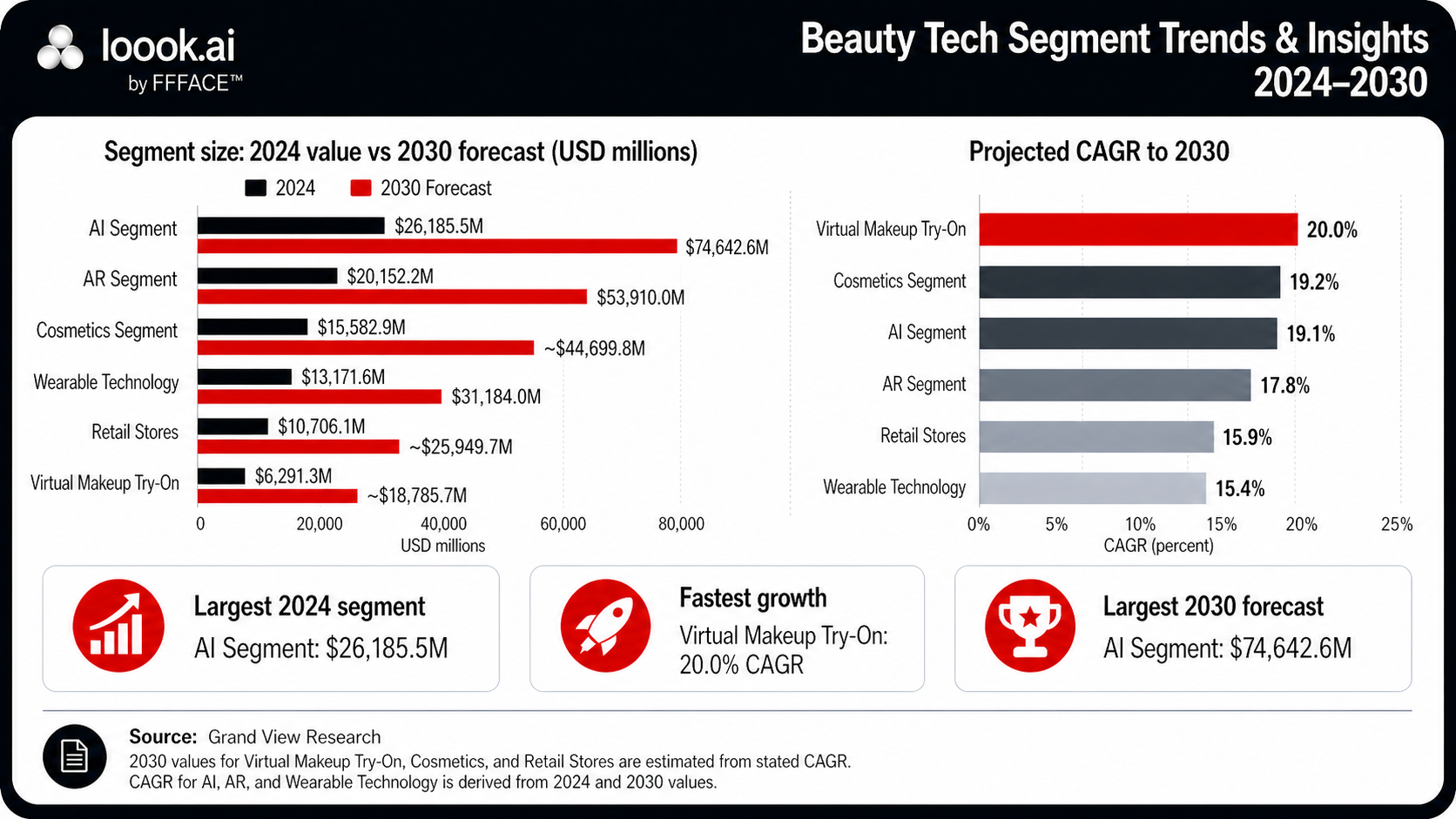
Beauty technology is becoming one of the fastest-growing areas of the beauty industry. The global beauty tech market was valued at USD 66.16 billion in 2024 and is projected to reach USD 172.99 billion by 2030, growing at a 17.9% CAGR, according to Grand View Research. Within this space, the virtual makeup try-on segment is forecast to grow from USD 6.29 billion in 2024 to USD 18.26 million by 2030, with a projected 20% CAGR, according to Grand View Research. Different sources estimate the AI beauty market differently, depending on how they define the category. For example, Research and Markets estimates the AI in beauty and cosmetics market will grow from USD 5.3 billion in 2026 to USD 10.86 billion by 2030, with a projected 19.6% CAGR. Meanwhile, Grand View Research uses a broader beauty tech segmentation and estimates the global AI beauty tech market at USD 26,185.5 million in 2024, with a projected 19.7% CAGR from 2024 to 2030. This difference likely stems from category scope: one report focuses specifically on AI in beauty and cosmetics, while the other includes AI as part of a broader beauty tech segment. Together, these numbers show that beauty tech is moving beyond novelty and becoming a core part of how beauty brands personalize product discovery, improve retail engagement, and connect digital and physical shopping experiences.
New Beauty Technologies Powering Innovation
The beauty industry is no longer just about formulas and packaging—it’s about personalized, tech-powered experiences. Today’s leading beauty brands are leveraging AI, AR, smart devices, and biotechnology to meet consumer demand for customization, convenience, and innovation. Below is a breakdown of the most impactful technologies reshaping product development, retail experiences, and customer engagement across the beauty sector.
AI Skin Diagnostics
AI skin diagnostics use computer vision and machine learning to analyze facial images, live camera feeds, or in-store mirror interactions. These systems can detect visible concerns such as dryness, redness, acne, pigmentation, uneven texture, enlarged pores, under-eye concerns, and fine lines.
For beauty brands and retailers, this makes skincare recommendations more precise. Instead of relying only on broad skin types like “dry” or “oily,” brands can suggest products based on visible concerns, customer goals, and real-time analysis. This improves product matching, builds trust, and helps customers feel more confident in their routine.
AI skin diagnostics are especially useful across e-commerce, retail consultations, pop-ups, and smart mirror experiences, where they can support beauty advisors, personalize product discovery, and turn skincare education into a measurable interaction.
AR Beauty Try-Ons
AR beauty try-ons let customers test makeup, skincare effects, hair colors, nail shades, eyewear, and beauty accessories in real time through a smartphone camera, website, social media filter, or in-store AR mirror.
For beauty brands, this technology makes product discovery faster, cleaner, and more engaging. Customers can compare shades, finishes, and looks without using physical testers, which helps reduce hygiene concerns and improves confidence before purchase.
AR beauty try-ons are especially valuable for color cosmetics and products where visual fit matters. They can increase engagement, support online and in-store conversion, reduce uncertainty, and give brands useful data on which products, shades, or looks attract the most attention.
3D Printing & On-Demand Products
Advanced 3D printing and on-demand manufacturing systems make it possible to create customized beauty products based on individual preferences, skin profiles, or shade-matching data. This can include personalized foundation, lipstick shades, skincare formats, or limited-edition product variations.
For beauty brands, the value goes beyond personalization. On-demand production can reduce excess inventory, limit overproduction, and support more sustainable product development. It also allows brands to test new formulas, shades, or product concepts faster before scaling them across a wider market.
Biotechnology in Beauty
Biotechnology in beauty uses biological data, ingredient science, and lab-developed actives to create more targeted skincare and cosmetic products. Some platforms analyze factors such as genetics, skin microbiome, ingredient sensitivity, or biological responses to build more personalized product recommendations.
For brands, biotech supports a more science-backed approach to beauty. It can help improve product performance, reduce the risk of irritation, and create formulas designed for specific skin needs rather than broad customer categories. This is especially relevant as consumers look for products that feel more precise, effective, and backed by credible research.
High-Tech At-Home Devices
High-tech at-home beauty devices bring professional-style treatments into the consumer’s daily routine. Popular examples include LED therapy masks, microcurrent tools, ultrasonic exfoliators, cleansing devices, and app-connected skincare tools.
These devices help beauty brands expand beyond traditional products into wellness, skincare routines, and long-term customer engagement. Connected apps can track usage, recommend routines, and support repeat purchases, while premium devices also create opportunities for higher-value DTC sales and stronger brand loyalty.
AR Mirrors
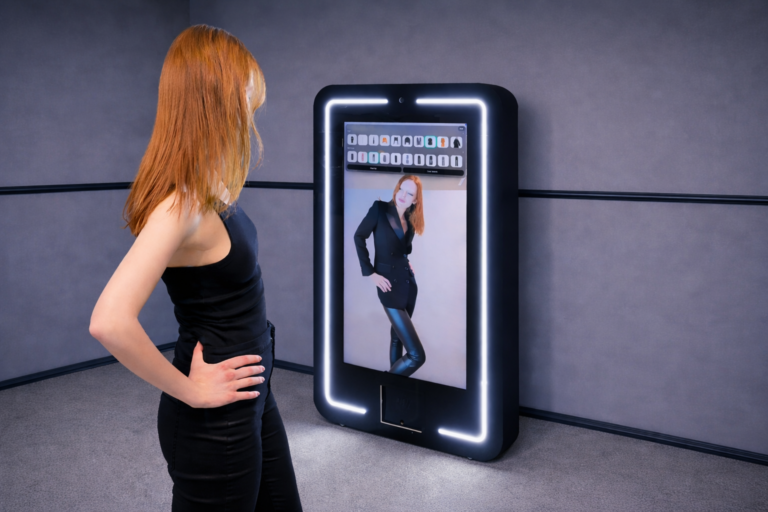
AR mirrors are interactive screens used in retail stores, pop-ups, events, and beauty counters. They detect a customer’s face or body in real time and overlay digital content such as makeup, skincare effects, hair colors, accessories, tutorials, or branded visual effects.
For beauty brands, AR mirrors turn physical retail into a more engaging and measurable experience. They allow customers to try products without physical testers, explore looks faster, and interact with the brand in a memorable way. At the same time, brands can collect useful engagement data, such as total interactions, dwell time, product try-ons, and the most popular shades or looks.
@ffface.me @Dolce & Gabbana takes over @Saks Fifth Avenue, New York. To launch the Fresh Skin collection, they created a stunning in-store activation — featuring our AR Mirror with a printing feature. Guests can virtually try on iconic #DG looks, print a photo of their favorite, and have it recreated by a professional makeup artist. Powered by @[loook.ai] Smart Screen the experience is personal, seamless, and measurable, inviting visitors to discover Fresh Skin Collection and leave with a sweet reminder. Strolling down Fifth Avenue? Make sure to stop by. #armirror #offlineactivation #marketinginnovations
♬ original sound – AR Mirrors,Filters, Phygitals
Voice & Chat AI Assistants
Voice and chat AI assistants help customers navigate product selection through e-commerce websites, mobile apps, smart kiosks, and in-store digital screens. They can answer FAQs, explain ingredients, compare products, recommend shades, and suggest skincare or makeup routines based on customer needs.
For beauty brands, these assistants make personalization more scalable. They reduce the pressure on in-store staff, support 24/7 customer guidance online, and help shoppers move from browsing to purchase faster. When connected to product catalogs, customer preferences, or previous purchases, AI assistants can also create more relevant recommendations and improve repeat engagement.
Data-Driven Product Development
Data-driven product development uses insights from AR try-ons, AI skin diagnostics, online behavior, reviews, product quizzes, and purchase patterns to understand what customers actually want. Beauty brands can analyze which shades are tried most often, which concerns customers mention, which products create hesitation, and which formulas drive repeat purchases.
This creates a stronger feedback loop between customer experience, marketing, and product innovation. Instead of relying only on trend forecasting or post-launch sales data, brands can use real-time behavioral signals to refine formulas, packaging, shade ranges, campaign messaging, and retail strategy. This helps reduce development risk and makes new launches more targeted.
Smart Devices & Wearables
Smart devices and wearables bring beauty closer to health, wellness, and lifestyle tracking. Tools such as smart rings, sensors, UV monitors, connected skincare devices, and sleep or stress trackers can collect signals related to sun exposure, rest, hydration, stress, and daily habits.
For beauty brands, this opens the door to more holistic personalization. Instead of recommending skincare based only on skin type, brands can connect routines to lifestyle factors that affect skin appearance and wellness. These insights can support personalized product recommendations, routine reminders, app-based coaching, and stronger positioning at the intersection of beauty, wellness, and health tech.
AI Beauty Tech Solutions
AI beauty tech solutions use computer vision, machine learning, generative AI, and customer data analysis to make beauty experiences more personalized, predictive, and measurable. In practice, this can include AI skin diagnostics, shade matching, product recommendation engines, virtual beauty advisors, routine builders, AI-powered content personalization, and retail analytics.
For beauty brands, AI helps move product discovery from generic categories to individual customer needs. Instead of recommending products only by skin type or bestseller status, AI systems can analyze visible skin concerns, user preferences, purchase behavior, environmental factors, and interaction data to suggest more relevant products or routines. This improves the customer journey across e-commerce, mobile apps, in-store consultations, smart mirrors, and interactive retail displays.
From a business perspective, AI beauty tech also supports better decision-making. Brands can use aggregated insights from diagnostics, virtual try-ons, quizzes, reviews, and sales behavior to identify product demand, optimize shade ranges, personalize campaigns, and improve future product development. This makes AI not only a customer-facing tool, but also an operational layer that connects beauty personalization with performance, data, and commercial growth.
Real-World Beauty Tech Examples
From luxury fashion houses to skincare giants, global brands are harnessing beauty tech to deliver deeply engaging and innovative customer experiences.
L’Oréal has led the way by integrating AI skin diagnostics and AR try-ons across its global portfolio, including AR mirrors in flagship stores and personalized online consultations.
Makeup by Mario, collaborating with Loook.ai and FFFACE.ME, offers a browser-based AR virtual try-on on their website. Users can test shades of eyeshadows, lip glosses, blushes, and more directly through their device’s camera—enhancing online purchase confidence and reducing returns.
In-store, Makeup by Mario also deployed a lifesize AR mirror at Sephora Times Square, where visitors virtually tried bronzer shades guided by a video tutorial from Mario Dedivanovic himself—boosting in-store dwell time and consumer engagement.
Kiehl’s used an engaging AR facial filter on the storefront of its flagship store to build excitement around new product launches. The filter—featuring branded effects—was designed purely for fun interaction, encouraging selfies and social shares rather than skincare diagnostics.
@ffface.me Are you ready to face the future of skincare? We partnered with @Kiehl’s Since 1851 to bring an #ARMirror experience that’s already turning heads. Located just outside #kiehls Nolita in New York, FFFACE.ME AR Mirror captures the attention of passersby, analyzes their skin in seconds, and invites them to step into the store for a deeper, personalized consultation. It’s a perfect example of merging technologies and expertise to bring value to customers and measurable results for business. #AR #digitalmarketing
♬ original sound – AR Mirrors,Filters, Phygitals
Key Beauty Technology Trends for 2026 and Beyond
Looking ahead, these are the defining trends reshaping the beauty industry landscape and propelling unprecedented market expansion and technological innovation:
- Hyper-personalization: AI tools are enabling beauty brands to tailor every product and interaction to the individual, from formulation to packaging.
- Phygital Retail: The blend of physical and digital through AR mirrors, smart storefronts, and digital shelves is redefining the in-store experience.
- At-Home Beauty Devices: Consumers are increasingly adopting high-tech skincare tools that mimic professional treatments, opening new DTC channels.
- Sustainable Innovation: Tech-driven R&D supports clean beauty, minimal packaging, and waste reduction through precision formulations.
- AI Marketing & Analytics: Beauty brands are investing in AI to segment audiences, personalize campaigns, and test product-market fit in real time.
Business Benefits of Investing in Beauty Tech
Here are the key reasons why brands, retailers, and investors are making beauty tech a priority in their business strategies:
- Increased customer engagement and in-store interaction
- Improved sales conversion through virtual trials and AI recommendations
- Enhanced personalization both online and offline
- Real-time consumer insights for smarter decision-making
- Reduced returns and better inventory management
- Stronger brand differentiation in crowded markets


Future Outlook: Growth Opportunities in the Beauty Tech Space
The global beauty tech market is on track to surpass $15 billion by 2030, with strong momentum across retail, DTC, hospitality, and wellness sectors. As brands look for ways to connect with consumers in more personalized and measurable ways, platforms like Loook.ai are enabling this shift through real-time AR overlays and engagement analytics applied to digital screens in-store and out-of-home.
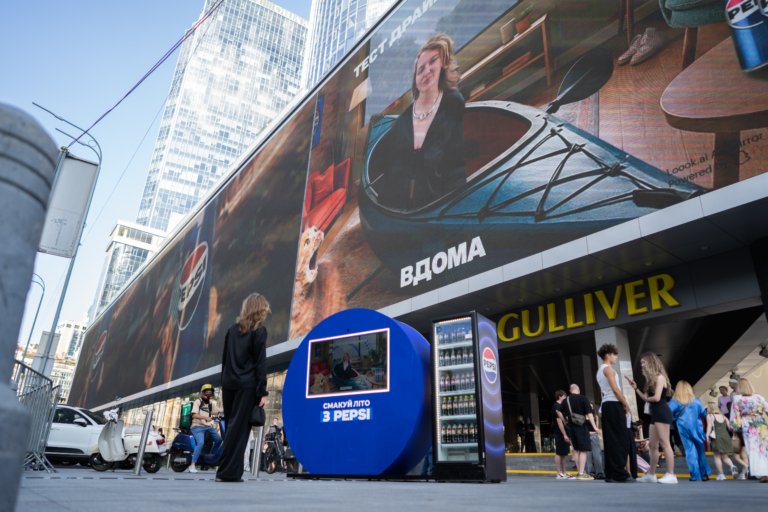
Loook.ai’s technology allows businesses to activate digital mirrors, storefronts, and billboards with interactive content while collecting data on user engagement—such as attention time, product preferences, and interaction rates. This approach reflects a broader trend: merging immersive brand experiences with performance insights to inform product development and marketing strategy.
With brands including Makeup by Mario, Prada Beauty, and Kiehl’s experimenting with AR-driven retail activations, the demand for scalable, measurable beauty tech solutions continues to grow. As the market matures, platforms offering both visual engagement and actionable data are becoming integral to digital transformation in beauty.
FAQ
What makes an AI beauty tech solution valuable for brands?
A strong AI beauty tech solution should do more than give basic product suggestions. It should connect customer input, skin or shade analysis, product catalog data, and behavioral insights into one system. The value comes from helping customers choose better while giving brands measurable data on demand, preferences, engagement, and conversion intent.
How are AR try-ons changing beauty product discovery?
AR beauty try-ons let customers test makeup, hair color, skincare effects, and beauty looks instantly without using physical testers. This is especially valuable for color cosmetics, where shade confidence matters. For brands, AR try-ons can increase engagement, reduce hesitation, support online conversion, and make in-store discovery more interactive.
What beauty technology trends should brands watch in 2026?
The most important beauty technology trends are AI skin diagnostics, AR beauty try-ons, smart mirrors, AI-powered product recommendations, connected at-home devices, data-driven product development, and biotech-based personalization. The bigger trend is the move toward beauty experiences that are personalized, measurable, and connected across online and offline channels.
How can beauty brands use technology without making the experience feel too complicated?
The best beauty tech solutions feel invisible to the customer. They simplify decision-making instead of adding extra steps. A skin diagnostic tool should lead to clear product recommendations, an AR mirror should work instantly, and an AI assistant should guide the shopper naturally. The goal is not to show off technology, but to make the beauty journey easier, faster, and more confident.
What role does beauty technology play in physical retail?
In physical retail, beauty technology turns stores into interactive environments. AR mirrors, smart screens, digital consultations, and AI-powered kiosks can help customers try products, compare looks, receive recommendations, and engage with the brand without relying only on traditional testers or staff availability. It also gives retailers useful data on what customers explore in-store.
What is the difference between beauty tech and traditional digital beauty marketing?
Traditional digital beauty marketing focuses mainly on promotion: ads, content, influencers, and e-commerce. Beauty tech goes further by making the experience interactive and personalized. It helps customers test, analyze, compare, and choose products in real time, while giving brands richer data than standard campaign metrics.