


AI vs. CGI: Choosing the Right Technology for Impactful Visual Content


CGI is a manual, artist-led workflow built for precision and control, while AI is built for speed and rapid content generation.
With CGI, artists create visuals step by step using 3D processes like modeling, texturing, lighting, animation, and rendering. This provides high control, consistency, and brand accuracy, making CGI ideal for polished, final-quality work.
AI (Artificial Intelligence), especially generative AI, is a data-driven, prompt-based method that creates images or video faster using trained models. It is great for ideation, variations, and quick testing, but less reliable when exact consistency is needed.
Because of this, many brands and studios use a hybrid workflow: CGI for final production and AI for concepting, exploration, and faster iteration. In the article, we also explain which technology brands should choose for different tasks, how to combine both in one workflow, and how to evaluate performance.
What is the Difference Between CGI and AI
Here’s a quick comparison of CGI and AI, highlighting where each technology works best in real marketing and creative workflows.
- Process: CGI is a manual 3D production workflow (modeling, texturing, lighting, rendering). AI is a prompt-based, model-driven generation workflow.
- Control: CGI offers precise control over every detail. AI offers less direct control and depends on prompting + iteration.
- Predictability: CGI is more repeatable and approval-friendly. AI is less predictable and can vary between outputs.
- Speed: AI is faster for concepts and variations. CGI is slower because assets are built step by step.
- Cost: AI is usually cheaper for ideation and testing. CGI is more expensive but stronger for final-quality assets.
- Brand Consistency: CGI is better for strict brand guidelines and product accuracy. AI may struggle with consistency across assets.
- Revisions: CGI supports precise edits. AI revisions can shift the whole result.
- Use Cases: CGI is best for hero visuals, ads, and premium campaigns. AI is best for concepting, social testing, and rapid content creation.
- Motion / Video: CGI is more reliable for controlled animation and continuity. AI video is faster, but consistency can still be an issue.
- Best Approach: Many brands use a hybrid workflow—AI for exploration and speed, CGI for polished final production.
What is CGI?
Think of Computer-Generated Imagery (CGI) as your digital art studio. It allows you to create visual assets using specialized 3D or 2D design software. When you work with tools like Autodesk Maya, Blender, or Unreal Engine, you gain complete artistic control over every aspect of your creation—from textures and lighting to motion and environments.
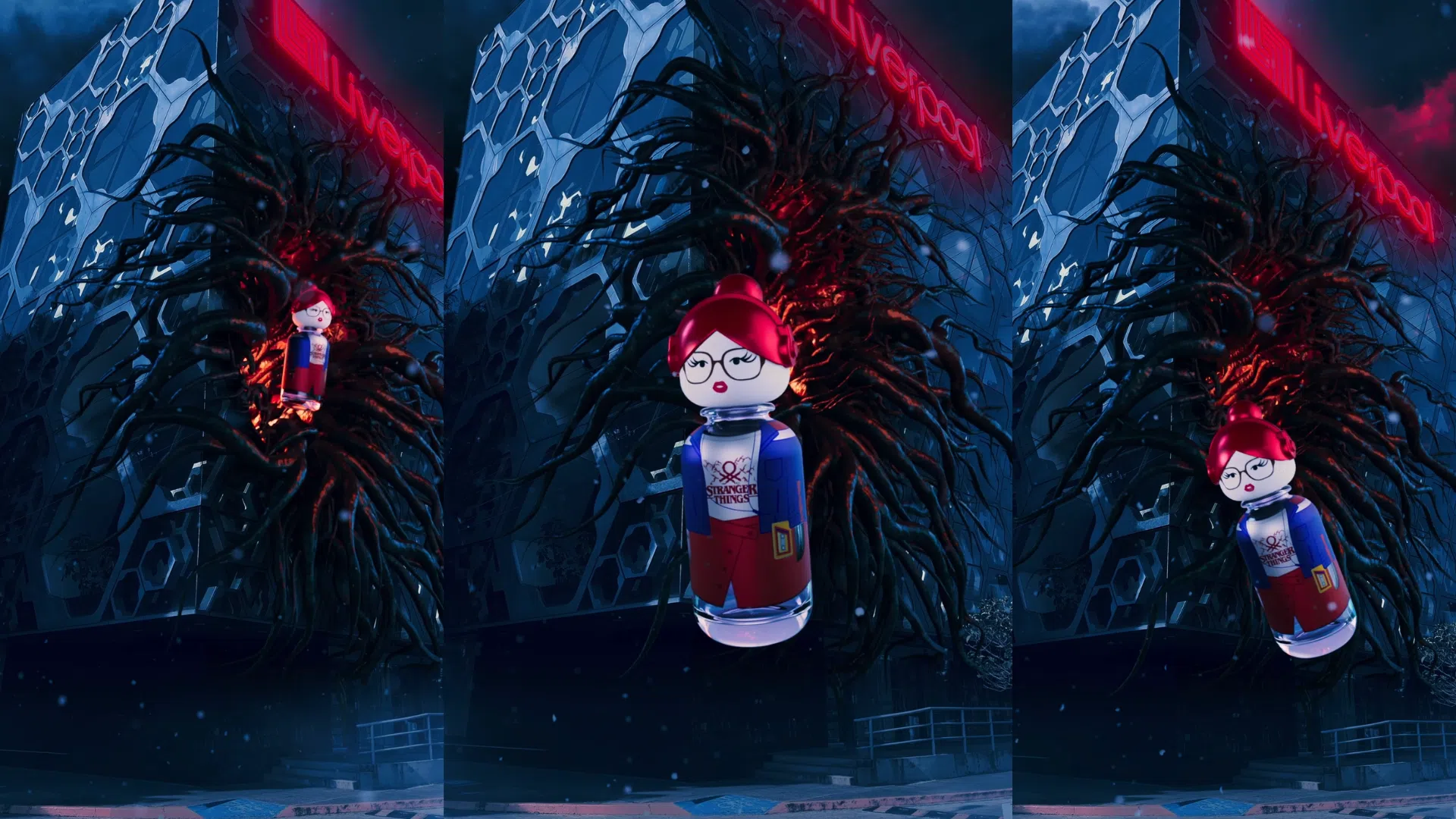
While CGI established its reputation in Hollywood and gaming, today it transforms business across industries. Consider how it powers virtual fashion shows, product configurators, interactive AR mirrors, and global brand launches.
How CGI Works
Unlike AI’s automated approach, CGI invites you into a manual, design-driven process with distinct technical stages. Your artists must meticulously craft each element—building 3D models, applying textures, configuring lighting, and programming animations. Once this creative work is complete, your computer renders all visual data into polished images or sequences, followed by post-production refinements. This deliberate, hands-on approach delivers the precise detail required in luxury, beauty, and architecture—industries where visual accuracy directly influences consumer trust.
Business Use Cases for CGI
- Product visualization: Imagine designing photorealistic animations of your luxury products before they even enter production.
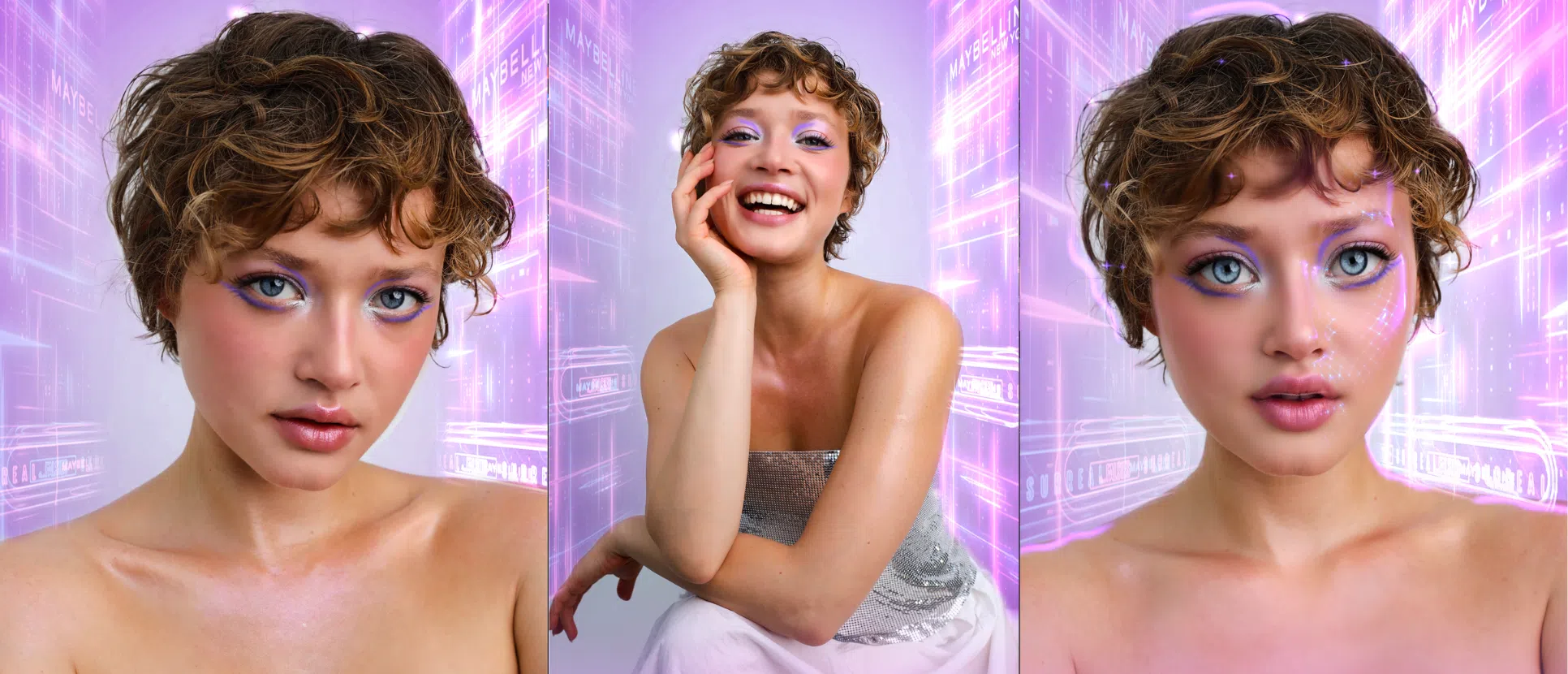
- Virtual try-ons: How might your customers experience your products remotely? CGI enables digital try-ons across beauty and fashion.
- Digital fashion: Consider expanding your brand into the digital realm with CGI-crafted garments that exist purely in digital spaces.
- AR/VR experiences: Envision your property development through immersive CGI walkthroughs that let clients explore spaces not yet built.
- Brand films and ads: When your brand story demands cinematic quality, CGI delivers visuals that capture attention and imagination.
Ask yourself: Does your project require visual excellence, realism, and custom interactivity? If so, CGI may be your ideal solution.
What is Generative AI?
Have you explored Generative AI yet? This technology harnesses machine learning models to transform your text prompts, scripts, or datasets into video content automatically. With platforms like Runway, Pika, Synthesia, and Hour One, you can scale your content creation efficiently without expanding your production team.
Consider how this differs from traditional methods: instead of meticulously crafting each asset, your team provides simple instructions or data variations, and the AI constructs videos complete with scenes, motion, voiceover, and potentially AI-generated presenters.
How Gen AI Works
How does generative AI streamline your video production workflow? Unlike CGI’s manual approach, this technology automates visual creation through sophisticated machine learning. The process begins with AI models (such as diffusion models and transformer networks) trained on extensive datasets of video clips, images, voices, and text scripts.
When you provide text prompts and brand elements, the AI synthesizes content by intelligently combining elements from its training. Within minutes, you receive a complete video, often with options for real-time refinements. Have you considered how this efficiency might transform your approach to campaign variants, social content, or internal communications?
Business Use Cases for Generative AI
- Localized advertising at scale: How might your organization leverage AI to create numerous geo-targeted or language-specific video ads within a compressed timeframe?
- AI avatars and virtual presenters: Could your enterprise benefit from platforms like Synthesia or Colossyan to develop multilingual explainer videos for employee onboarding or product education?
- Short-form social content: What if your team could use tools like Runway to create content for platforms like TikTok or Instagram Reels that aligns with current visual trends?
- E-commerce product videos: Have you considered how AI could automatically produce product feature clips using dynamic templates across your product catalog?
When would AI video generation serve your needs best? Consider projects requiring speed, variation, and wide-scale personalization without compromising delivery timelines.
Key Differences: CGI vs. AI
| Feature | CGI | Generative AI |
|---|---|---|
| Creation process | Built manually by 3D artists using professional software | Generated automatically using AI models and text prompts |
| Creative control | Full control over every visual and animation detail | Partial control via inputs and parameters |
| Output format | High-resolution images, 3D assets, animation, AR/VR modules | Video with AI voice, motion graphics, synthetic scenes |
| Visual quality | Extremely high — photorealistic if needed | Varies — improving rapidly, ideal for simple or stylized formats |
| Speed to delivery | Weeks to months | Minutes to days |
| Scalability | Limited by talent and rendering power | Unlimited output volume based on templates or data |
| Tools | Maya, Blender, Unreal Engine, Cinema 4D | Runway, Synthesia, Pika, Colossyan |
| Cost range | $5,000 to $50,000+ per asset/campaign | $30 to $500/month per seat or per output |
CGI vs. AI: Copyright & Ownership
Have you considered the intellectual property implications of your visual content strategy? When it comes to ownership rights, CGI and AI present distinctly different scenarios:
With CGI assets, your ownership position is clear and protected. These human-authored creations receive full intellectual property protection. Whether your team creates them in-house or you commission them from partners, your business maintains commercial usage rights according to contract specifications. This legal clarity becomes particularly valuable when your exclusive, protected creative assets form a cornerstone of your brand value.
What about AI-generated content? Here, ownership becomes considerably more nuanced. Have you examined the terms of your AI platform providers? Many of these systems are trained using copyrighted material and may not extend full commercial rights to users. In some cases, platforms retain partial ownership of outputs or require attribution in published materials.
How might this legal uncertainty impact your brand strategy, especially when brand safety, originality, and intellectual property protection are priorities?
Best Practices to Consider:
- How thoroughly has your legal team reviewed the terms of service for your AI content tools?
- Which platforms in your technology stack offer the most comprehensive commercial rights?
- For assets requiring exclusivity or legal defensibility, how might CGI provide a more secure alternative?
Regulatory Considerations for AI-Generated Content
With the rapid adoption of generative AI in marketing, global regulators and advertising authorities are beginning to enforce transparency and accountability.
- United States: The FTC prohibits deceptive practices involving AI-generated endorsements or fake reviews. Political ads using AI must disclose their nature in several states and under proposed FCC rules.
- European Union: The EU AI Act mandates transparency for synthetic media and prohibits deceptive content in high-risk use cases.
- UK ASA Guidance: Advertisers are encouraged to disclose when AI is used in visual or voice-based messaging that may mislead consumers.
- Platform Policies: YouTube, Meta, and Google Ads are updating ad policies to require labeling for AI-generated political content.
AI and CGI: How Do Your Audiences Perceive Them?
Have you considered how your audience perceives CGI versus AI-generated content? The distinction is significant. CGI is typically viewed as a deliberate artistic craft—human-designed and intentional. This human touch in film, gaming, and luxury advertising lends CGI higher perceived authenticity and trustworthiness. When your beauty or fashion campaign uses CGI, consumers generally accept these visuals as integral to your brand identity. Well-executed CGI doesn’t just represent your products—it enhances your brand’s credibility and value.
What about AI-generated content? Research indicates that audience acceptance hinges on three key factors: transparency, realism, and emotional resonance. While unlabeled AI content may perform well initially, how might disclosure affect your audience’s trust? A ScienceDirect study reveals that content identified as AI-generated is often perceived as less engaging, regardless of quality. Similarly, research from Getty Images and NielsenIQ suggests consumers prioritize authenticity and prefer clear identification of AI content.
Consider the psychological dynamics at play: AI content that appears more “intelligent” tends to gain acceptance, but when does it cross into feeling artificial or “eerie”? This balance directly impacts how credible or trustworthy your audience finds your content. Have you explored how combining AI automation with human storytelling elements might address this challenge? Data shows that advertisements integrating AI visuals with human narration or presence consistently achieve higher trust and recall rates. How might this hybrid approach serve your communication goals?
Strategic Recommendations: Which Technology to Choose?
When choosing between CGI and AI video, align your decision with your broader marketing objectives, available resources, and legal risk tolerance. Consider these key factors when making your selection:
Use CGI when:
- You need full ownership and legal clarity
- Visuals play a central role in brand differentiation (e.g. luxury goods, beauty, automotive)
- You’re investing in evergreen assets or immersive experiences
Use AI video when:
- You need to quickly generate high volumes of content
- Budget or bandwidth limits traditional production
- You’re running tests, experiments, or dynamic messaging campaigns
Combine both when:
- CGI assets can feed into scalable AI video workflows (e.g., product visuals used in AI-generated explainers or ads)
- You want to protect key IP while rapidly adapting content for social or international markets
Final Thoughts: Your Strategic Next Steps
How might your brand benefit from viewing CGI and Generative AI Video not as competing solutions, but as complementary tools in your modern content strategy? Consider how forward-thinking organizations are already leveraging CGI for their core brand storytelling and immersive experiences, while simultaneously employing AI video capabilities for distribution, personalization, and scale.
What adaptable content strategies could your team implement as these technologies continue to evolve? The potential rewards include enhanced efficiency, improved ROI, and more meaningful customer interactions across your digital touchpoints.
Are you ready to explore integrating these powerful tools into your content pipeline? Whether your focus is e-commerce, experiential marketing, or another domain entirely, we’re available to help assess appropriate workflows, platforms, and creative directions specifically aligned with your business objectives.
FAQ: CGI vs AI
Is CGI considered AI?
No. CGI (Computer-Generated Imagery) is not the same as AI. CGI is a traditional, artist-led 3D production method, while AI generates content using trained models and prompts.
Is CGI better than AI?
Not overall — it depends on the task. CGI is better for precision, brand consistency, and final-quality production, while AI is better for speed, ideation, and rapid testing.
What are current CGI trends?
Key CGI trends include real-time rendering, virtual production, AI-assisted 3D workflows, and more use of CGI in short-form advertising and social-first campaigns. Recent industry coverage also highlights tighter-budget productions using faster pipelines and hybrid CGI+AI workflows.
What brands use CGI?
Many brands use CGI in advertising, product visuals, and campaign content — especially in fashion, beauty, automotive, and consumer goods. Examples frequently discussed in industry roundups include brands like Pandora and Victoria Beckham in fashion-focused CGI ads.
What brands use AI?
Many global brands use AI for marketing, personalization, creative testing, and campaign optimization. Industry examples and roundups often mention brands such as Nike, Coca-Cola, Starbucks, Netflix, Disney, Nestlé, Meta, and Amazon.
Is CGI being replaced by AI?
No — in most professional workflows, CGI is not being replaced, but augmented by AI. Brands and studios increasingly use AI to speed up ideation and variations, while CGI remains important for controlled, polished final assets.
Can AI be used for CGI?
Yes. AI can support CGI workflows by helping with concept generation, references, style exploration, texture ideas, upscaling, rotoscoping, cleanup, and faster iteration. In practice, many teams combine AI + CGI in one pipeline.