

CGI Ads in Marketing: How to Drive KPIs, Not Just Attention


CGI ads are everywhere right now, from glossy product visuals to “impossible” city-scale stunts. But for most marketing teams, the real question is not whether CGI can look impressive. The question is whether it can perform.
This article breaks CGI down as a scalable marketing asset: how it supports different funnel goals, what success metrics actually matter, where CGI outperforms live production, and where it can backfire. If you want CGI that drives KPIs, not just attention, start here.
What Is CGI in Advertising
CGI (Computer-Generated Imagery) in advertising is a production method where brands use 3D modeling, texturing, lighting, animation, and rendering to create product visuals or full scenes digitally. Instead of relying only on cameras, studios, and locations, teams can build the product and its environment in software and control every detail—materials, reflections, shadows, and motion.
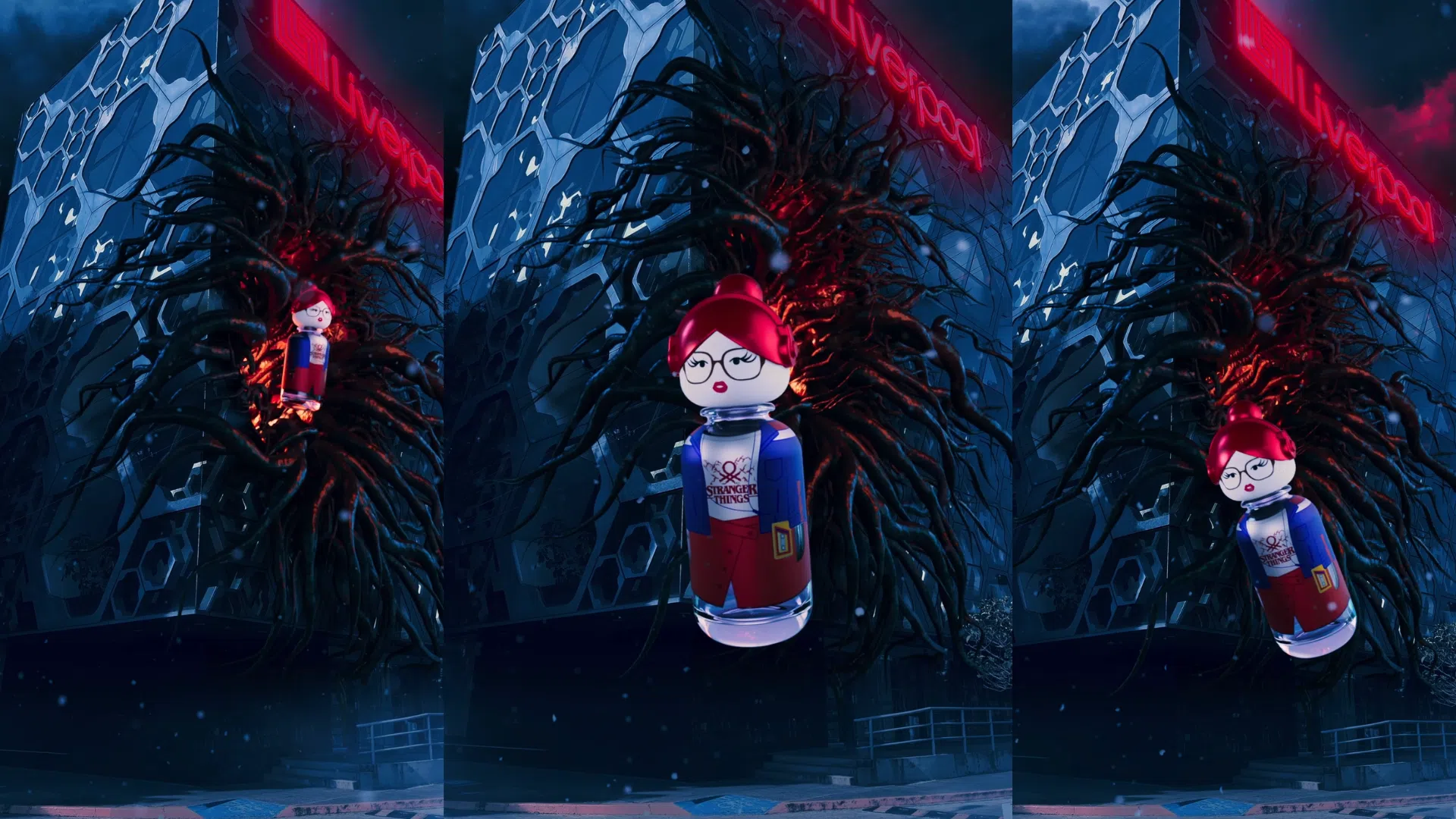
CGI can be photorealistic (like a real shoot) or intentionally stylized/surreal (made for attention and shareability). It also powers VFX (visual effects), where CGI elements are composited into live-action footage, and FOOH (Fake Out-Of-Home) campaigns—“impossible” billboards, giant products, or city-scale stunts designed to spread on social.
In practice, CGI reduces physical production needs and reshoot risk. Once a strong 3D asset exists, brands can create fast variations (formats, angles, backgrounds, localizations) while keeping visuals consistent across every channel.
Why CGI Marketing Is Growing So Fast
CGI marketing is growing so fast because it matches how modern campaigns are built: high-volume, multi-format, always-on content instead of one “hero” shoot. Brands need assets for paid social, e-commerce, in-store screens, DOOH, and product pages—often with dozens of variations by market, language, season, or SKU. That demand is only accelerating: the digital content creation market is projected at ~$42.5B in 2026. CGI turns that into a scalable workflow: once the core 3D assets exist, teams can generate new angles, backgrounds, animations, and formats without restarting production from zero.
It’s also growing because it reduces production friction and risk. Fewer location shoots, fewer prototypes, fewer logistics, fewer reshoots—while giving tighter control over brand consistency and making it easier to iterate fast based on performance data. In short: CGI is popular not just because it looks impressive, but because it’s a more efficient way to produce premium creative at the speed marketing now demands.
Key Benefits of CGI Advertising for Business
CGI isn’t just a “cool visual style”—it’s a production advantage. For brands, the real value is operational: faster content cycles, tighter consistency, easier localization, and more predictable delivery across channels. Here are the key benefits businesses get from CGI:
- Speed that compounds: Once you’ve built a high-quality 3D product asset, you’re no longer “starting over” for every new deliverable. New scenes, crops, formats, and cutdowns become iterative—especially valuable when you’re shipping content across multiple channels and markets.
- Brand control by design: CGI lets you standardize the look: lighting, materials, camera angles, reflections, and composition. That means premium consistency at scale—ideal for categories where small details signal quality (luxury, beauty, automotive, consumer tech).
- Versioning becomes a system, not a fire drill: Colors, claims, languages, pack updates, legal tweaks—CGI makes variation production routine. Instead of re-shooting, you update modular elements and generate approved versions without breaking the timeline.
- Less logistics, less risk, more predictability: No studio bookings, shipping delays, fragile prototypes, weather problems, or location permits. CGI reduces the operational friction that usually derails schedules and budgets—so delivery is easier to plan and repeat.
- Storytelling beyond the camera: CGI can show what real footage can’t: ingredient “worlds,” internal mechanisms, exploded views, transformations, and impossible scale moments. That opens up clearer product education and more memorable creative—without sacrificing polish.
Best CGI Ad Examples and Use Cases
CGI isn’t one format—it’s a toolkit brands use to produce consistent, high-impact visuals across channels, markets, and timelines. Common business use cases include:
Holiday and seasonal campaigns
CGI makes seasonal refreshes efficient because you keep the same “master” product assets and simply swap the world around them. That means winter gifting, summer launches, Valentine’s, local holidays, or travel retail moments can be produced as a controlled set of variations—backgrounds, props, lighting mood, copy, and limited-edition packaging—without rebooking studios or rebuilding everything. It’s especially useful when you need the same campaign to feel consistent across regions, but still localized in tone and messaging.
E-commerce and PDP content
CGI is a workhorse for conversion content because it delivers consistency at scale. You can generate catalog-quality packshots, 360 spins, colorways, feature callouts, and short demos that stay uniform across many SKUs and marketplaces. It also helps with operational reality: when packaging updates, claims change, or you need new angles for a retailer, you can update and output new assets without re-shooting the entire catalog.
Product launches (hero visuals)
Launch CGI is about setting the premium standard fast. Brands use hero films and key visuals with cinematic lighting, clean packshots, and branded environments to make a new product feel iconic from day one. Because the core asset is digital, you can roll out a full “launch kit” in parallel—teasers, reveal cutdowns, retail screens, marketplace imagery, and social formats—without the typical delays of reshoots or late-stage redesigns.
DOOH and in-store screens
CGI is ideal for screen networks because it’s built for modular adaptation. High-contrast loops and clear motion read well at distance, and you can tailor messaging for different stores, languages, and promotions while keeping the same visual system. That makes rollouts smoother: one creative platform, many location-specific variants—updated quickly as campaigns change, inventory rotates, or seasonal promotions arrive.
Social-first scroll stoppers
CGI shines in attention economics because it can do the “impossible” cleanly—surreal scale, unexpected physics, instant transformations, or exaggerated product benefits—while staying on-brand. These concepts are designed for 9:16 placements and fast hooks: a strong first frame, immediate product recognition, and motion that communicates the idea in seconds. The value is not just virality—it’s repeatable performance testing through multiple hooks and variants.
Product and texture visualization
When detail sells, CGI becomes a clarity tool. It can highlight materials, finishes, liquids, ingredients, and mechanics in a way that’s hard to shoot consistently (especially for reflective surfaces, transparent packaging, or macro textures). Exploded views, cross-sections, and transformation moments make complex products easier to understand and more credible—often improving purchase confidence without relying on perfect studio conditions or expensive prototypes.
Brand collaborations
Collabs often fail visually when two brand systems clash. CGI helps unify them: shared worlds, matched lighting, and controlled color/typography rules that respect both identities. It also makes distribution easier—one co-branded master concept can be versioned into assets tailored to each partner’s channels, formats, and audiences without doubling production work or creating inconsistent “two different campaigns” problems.
How Great CGI Ads Are Made: Best Practices and Common Mistakes to Avoid
Great CGI isn’t just “nice rendering”—it’s a production and performance system. The strongest teams treat CGI like a scalable business asset: clear objectives, repeatable workflows, fast versioning, and measurable iteration. Here are the key best practices paired with the most common mistakes to avoid:
- Define the KPI before you start
- Align the creative to the funnel stage (awareness, product education, conversion, or launch hype), then choose one primary KPI (VTR, CTR, add-to-cart, etc.).
- Pitfall: Vague goals can lead to beautiful assets with weak ROI and endless subjective feedback.
- Design for scale from day one, not as an afterthought
- Plan a versioning matrix upfront: formats (9:16/1:1/16:9), markets and languages, SKUs, claims, seasonal themes, plus DOOH and in-store adaptations.
- Pitfall: Treating every deliverable as a custom job instead of building once and reusing a system.
- Lock brand consistency with a clear approval system
- Define what’s non-negotiable (product proportions, label accuracy, brand colors, typography, logo safe zones) versus what can change (backgrounds, copy layers, seasonal elements).
- Pitfall: “Product truth” breaks (wrong proportions, labels, finishes) create approval loops, delays, and expensive rework.
- Keep it credible: avoid the uncanny valley
- Use real-world references and brand-approved material standards. If photoreal is the goal, match physics (lighting, reflections, shadows, motion).
- Pitfall: Too-perfect lighting, odd reflections, and plastic-looking materials reduce trust and can hurt conversion, especially in premium categories.
- Prioritize clarity over complexity
- Stick to one hero idea per asset. Use a clear hierarchy (product > benefit > brand) and simplified backgrounds for mobile readability.
- Pitfall: Overcomplicated scenes dilute the message, lower recall, and weaken performance.
- Use hybrid workflows when authenticity drives purchase confidence
- Combine CGI with real footage or real macro shots when tactile truth matters (beauty swatches, food texture, “real hands,” testimonials).
- Pitfall: Going fully CGI in categories where audiences expect “real proof” can create skepticism and reduce conversion.
- Win the first 1–2 seconds (especially in paid social)
- Lead with a strong opening frame, immediate product presence, a clear motion cue, and simple messaging.
- Pitfall: Slow cinematic reveals waste attention and underperform on mobile placements.
Measuring Results: What to Track in CGI Campaigns
CGI should be judged like any other creative: by the business outcome it drives and the stage of the funnel it’s built for.
For awareness and reach, look for proof that the work earns attention: view-through rate (VTR), 3-second views, completion rate, CPM, and incremental reach versus your other creatives.
For engagement and consideration, measure whether it holds attention and moves intent forward: thumb-stopping performance in the first 1–2 seconds, CTR, saves, shares, comment quality, landing page view rate, and engaged sessions.
For conversion, track whether the visuals turn into action: add-to-cart rate, conversion rate, CPA/ROAS, product page scroll depth, time on key sections, PDP video plays, and assisted conversions (CGI often influences earlier steps, then gets credit later).
For production efficiency, prove CGI as a scalable system—not a one-off: cost per asset and per variant, time-to-version for new markets/claims/formats, and the reuse rate of 3D assets across campaigns, because reuse is where ROI compounds.
When to Choose CGI
Choose CGI when your campaign needs precision you can scale—the kind of control that turns creative into a repeatable system. If you’re launching a product, managing multiple SKUs, localizing for different markets, or producing a steady stream of assets across paid social, e-commerce, DOOH, and in-store screens, CGI gives you consistent lighting, materials, angles, and brand rules that don’t drift from version to version. Generative AI is the opposite strength: it’s excellent for speed, ideation, and exploring lots of directions early, but it can be unpredictable when you need exact product truth, strict brand consistency, or compliance-ready outputs. Traditional production wins when authenticity is the product—real people, real texture, real-world proof—where the “this is genuine” signal matters more than perfect control. In many teams, the smartest path is a blended pipeline: use AI to generate concepts and test hooks, CGI to produce premium, scalable hero assets and variants, and live shoots when credibility and tactile reality are the deciding factors.
Work with FFFACE.ME on Scalable, Brand-Accurate CGI
If CGI is on your roadmap and you want it to deliver premium quality without turning into a one-off production, FFFACE.ME can support the full workflow—from concept and art direction to brand-accurate CGI assets built for scale. We focus on creating visuals that hold up across real placements (paid social, e-commerce, DOOH, in-store) and are structured for versioning by format, market, and SKU without losing consistency. Share your product details, timeline, and target channels, and we’ll recommend the right CGI approach, deliverables set, and production plan to match your business goals.